Reinvigorating Play with the Outlast Mud Kitchen
A Case Study of Mud and Market Days
| April 2026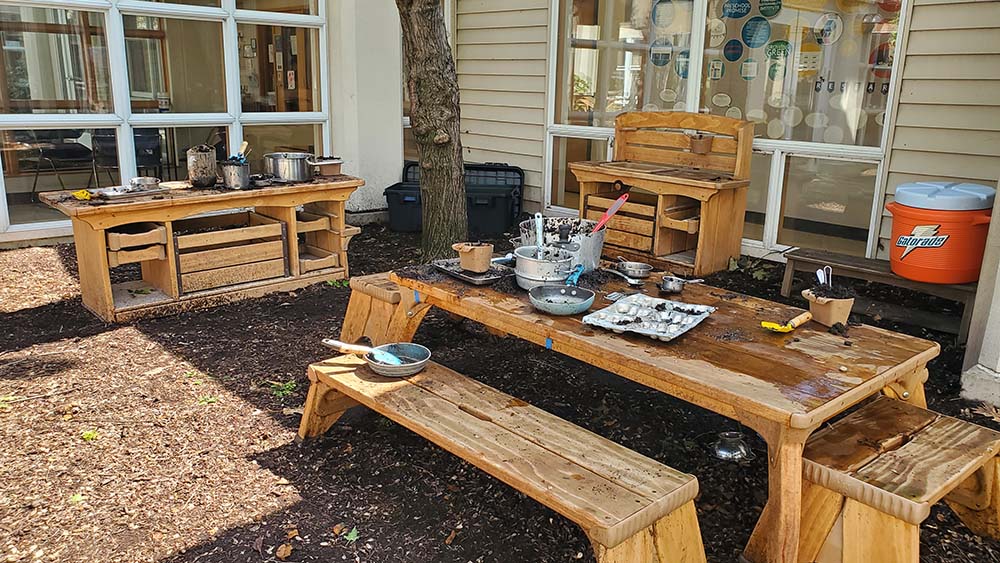
In spring 2025, a demonstration school at a midwestern university faced a challenge that might be familiar to many early childhood programs: a beautiful outdoor space that children struggled to engage with meaningfully.
Despite a variety of trees and plants, a garden, and a few tables and benches, educators felt more confident taking children to the traditional playground, with its climbing structures, swings, and a bike path.
Our team at Growing Green Curriculum, which is working to develop an early childhood sustainability curriculum, knew this was an opportunity. With the right equipment and intentional design, we set out to transform the space into an outdoor classroom where children could engage in deep, layered play.
Understanding the Challenges and Opportunities
A tour of the courtyard and conversations with the program's administrative team helped us gain a deeper understanding of the challenges educators face when planning for outdoor learning.
Research shows that children are spending less time outdoors than before, so it's not surprising they may struggle with creative outdoor play. This challenge is compounded by a persistent misconception in early childhood settings: that outdoor time is for traditional “recess,” where children run around and meet their physical needs with little interruption from educators other than supervision and redirection to ensure safety.
But program administrators at the this school had a different vision.
Their hope was that a fresh, inspiring space would encourage children to explore and play in new ways, allowing educators to observe these interests and plan additional learning experiences as part of their child-led, emergent curriculum.
As conversations evolved, we realized the courtyard could do even more—it could reflect the university's larger sustainability initiatives, specifically reducing food waste through composting and ensuring food equity and community resilience. We began designing updated areas that would intentionally focus children’s play on four interconnected concepts:
Gardening: An inviting, accessible space where children could plant seeds or starter plants, observe how plants grow, tend to them by weeding, and harvest the produce for tasting experiences.
Composting: A dedicated area with a composting tumbler for children to explore how food waste from breakfast, lunch, and snack can be added, layered with other organic materials, and turned into compost.
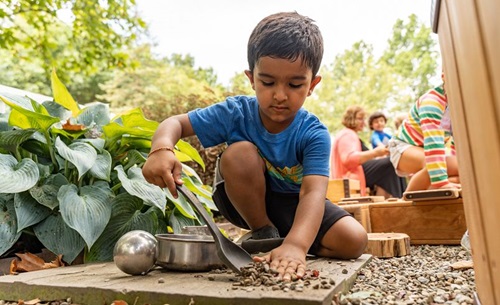
Mud Kitchen Play: A repurposed space large enough to accommodate child-size furniture that would encourage sensory exploration with natural elements like dirt and water.
Farmer’s Market: A farmer's market dramatic play stand already existed in the courtyard but sat unused. As a nod to the University of Dayton’s Flyer Farmers’ Market—which provides students with fresh food every fall—we wanted to create a space where children could run a child-led market stand, complete with sorting and weighing produce and creating signage to “sell” it.
The key would be finding and placing the right equipment to bring this vision to life.
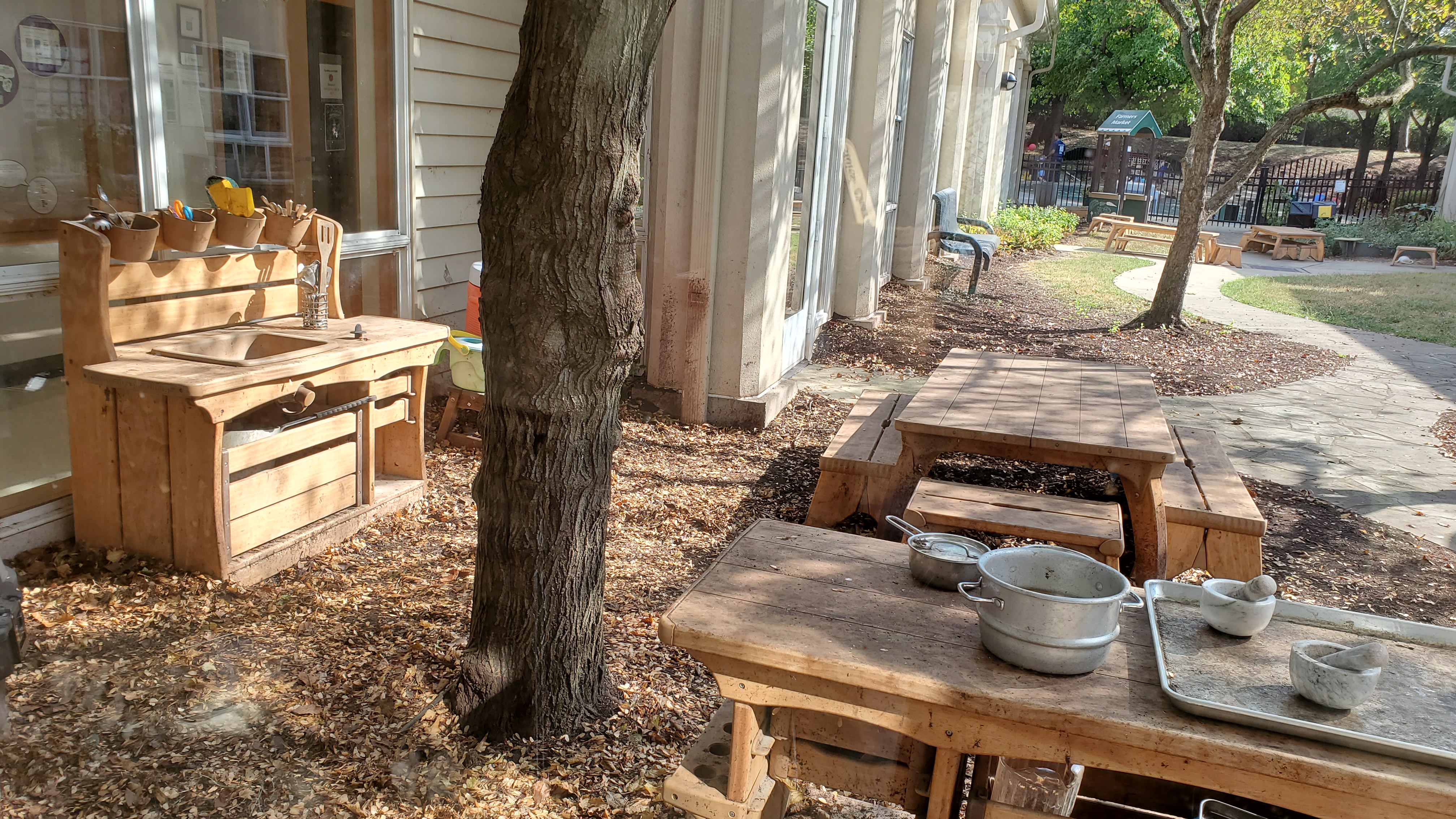
Finding Furniture That Could Transform the Space
In the spirit of sustainability, we approached the first phase of redesign by walking through all of the outdoor spaces with the administrative team, looking for furniture that might be repurposed. Our goal was to identify pieces that could inspire deeper play in the courtyard.
We knew we needed child-size equipment to help the spaces feel warm and inviting. It was also important that we remain steadfast to our mission and select pieces made from sustainably sourced wood that would stand up to repeated use in an area with grass, mud, mulch, and falling buds and leaves from the surrounding trees.
On the main playground, we found an Outlast Classic Kitchen set adjacent to a large sand pit. Educators reported that children used it, but play was limited—filling sand toys with dry sand and dumping them out on surfaces.
We relocated this Kitchen Set to become the heart of the new mud kitchen, and the transformation illustrated exactly why equipment choice matters.
Durable materials designed for outdoor use: Made from sustainably sourced, weatherproof wood, the Outlast pieces could withstand all types of weather and would hold up through years of messy, nature-based play.
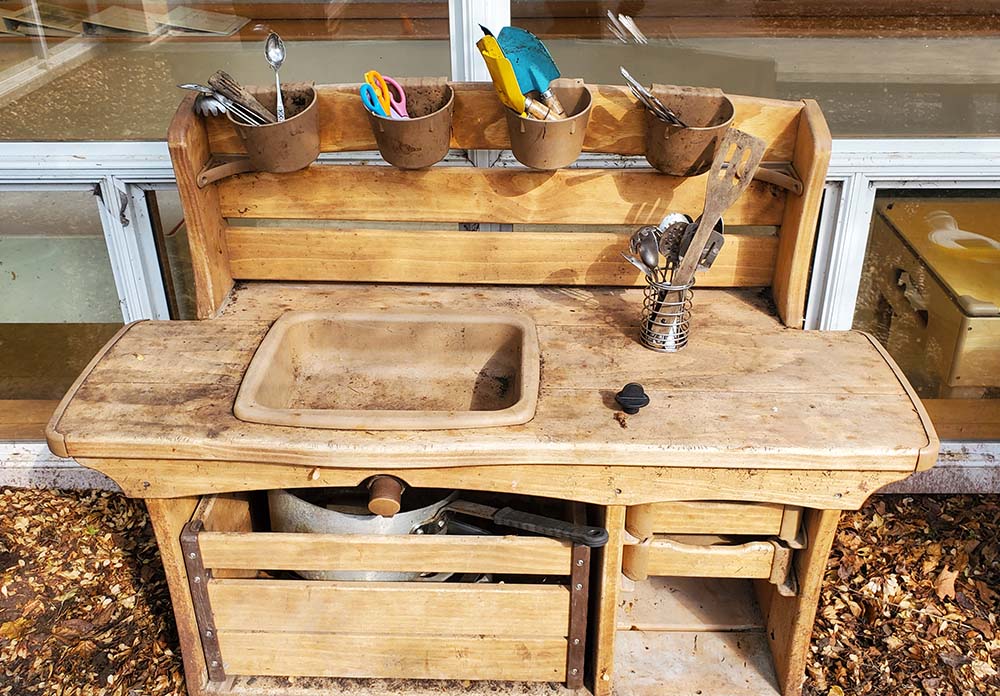
Functional features that extend play possibilities: The kitchen sink wasn't just decorative. It invited children to rinse garden produce and “wash” dishes before taking them to the farmer's market. The tethered plug in the sink basin allowed children to experience water as both stationary and flowing, creating opportunities for educators to model water conservation by collecting leftover water for the garden.
Abundant, accessible storage: The crates and Nature Trays under the countertops provided space for authentic materials—donated pots, pans, serving trays, and metal silverware. Handbrooms and dustpans stored in Nature Trays made cleanup manageable for both children and educators, removing a common barrier to messy outdoor play.
The right size for multiple children: Unlike the old workspace that accommodated only two or three children, the Outlast Classic Kitchen Set's large work surfaces provided space for multiple pots, pans, and cookie sheets in various sizes, allowing several children to play alongside one another.
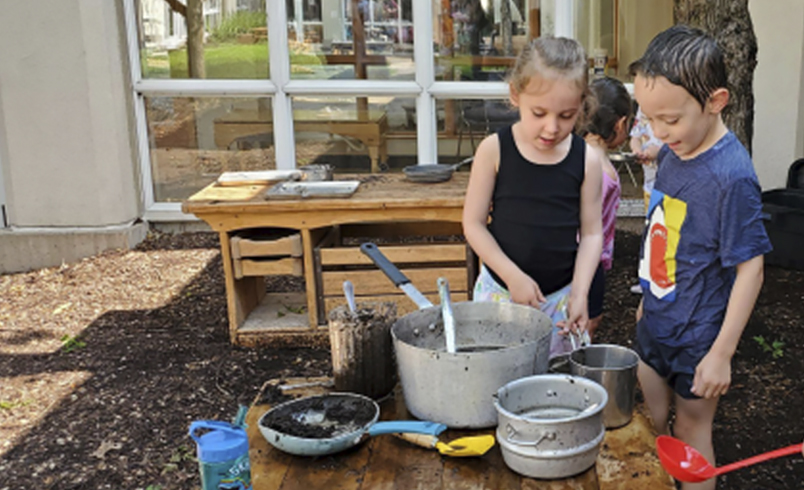
The Game-Changer: Nature Trays
Children were perhaps most excited by the Nature Trays—and their enthusiasm revealed an important insight about equipment design. The trays’ size and durability made it possible for children to carry them throughout the courtyard independently: gathering produce from the garden, observing insects and plant specimens, transporting loose parts and natural materials from one area to another, and holding their “earnings” from farmer’s market sales.
These trays became the connective tissue between all four play areas, enabling children to create their own narratives and move fluidly through the space. This is what transporting schema looks like in action—and it required equipment sturdy enough for children to manage independently.
Creating Flow Through Strategic Furniture Placement
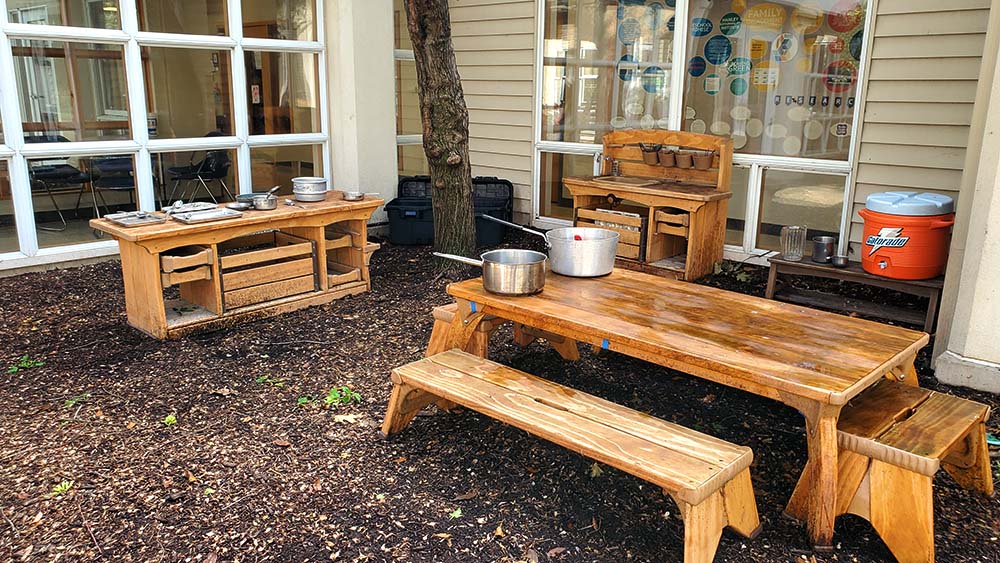
The courtyard already included Outlast Project Tables and Benches—enough seating for an entire preschool classroom—plus Outlast Seats in taller heights. We strategically distributed these throughout the space:
- One table and benches moved to the large corner with the Kitchen Set to create the mud kitchen zone
- Two tables remained near the garden bed and farmer's market stand for sitting with peers and educators during meals, snacks, and small group activities
Multiple seating areas spread throughout the courtyard supported a natural ebb and flow as children moved between experiences. The taller seat heights allowed educators to join children comfortably at their level—transforming outdoor time from supervision at a distance to genuine participation in play and learning.
From Unused to Essential: Transforming the Farmer’s Market Stand
The farmer’s market dramatic play stand had existed in the courtyard before our redesign but sat unused. The addition of the right surrounding equipment brought it to life. With Nature Trays for transporting produce, tables for sorting and preparing items, and the mud kitchen for “cooking” and “washing,” children suddenly had a complete system for farm-to-table dramatic play. They could harvest from the garden, prepare items at the mud kitchen, and bring them to market—creating interconnected narratives that extended their engagement.
Bringing Educators Along
Throughout the project, we made it a priority to share our work with program educators so they could understand the process and rationale behind our decisions. We know educators face numerous barriers when it comes to getting children outdoors, and we wanted to address their specific feedback about the courtyard to help reduce some of these barriers.
We used the program's electronic communication app to share the concept behind this new space, which we affectionately called “Mud and Market Days.” Our hope was that children would create their own personal stories through each scoop of soil, every turn of the compost bin, and all the pretend sales made at the farmer's market booth.
To support implementation of this new initiative, we hosted a Mud and Market Preview Day, where classrooms came out “open-house” style to the courtyard. We invited educators and children to engage in play and ask questions about the setup, and we shared quick tips for setting up, cleaning up, and conserving water for rinsing materials and watering the garden.
How the Design Supports Children's Learning
The intentional design of the Outlast collection supports specific learning outcomes that align with early childhood development:
- Transporting schema: Nature Trays are perfect for children to take loose parts and natural materials from one part of the courtyard to another, building their understanding of how objects move through space.
- Transforming schema: The kitchen sink invites children to explore transformation as they mix dirt and water together to create mud. The tethered plug in the sink basin allows them to experience how water can be stationary and flowing.
- Conservation concepts: Educators can model collecting leftover water from pretend dishwashing and using it to water the garden. These daily experiences provide natural opportunities for conversation about water conservation.
- Scientific exploration: The large work surfaces provide space for pots, pans, and cookie sheets in various sizes. These authentic learning materials give children an avenue for exploring concepts like saturation, evaporation, and erosion as they create different consistencies of mud.
- Farm-to-table experiences: Large tables make it possible for children to bring cutting boards and safe cutting tools outside, with enough space to move around as they cut up vegetables for tasting experiences.
The Transformation
One preschool classroom began visiting the courtyard space weekly. We noticed the children engaged in more collaborative play, helping one another to get water from a large recycled Gatorade cooler, brainstorming what they could create in the mud kitchen, and learning to use new materials like the mortar and pestles. The relocated kitchen set was surrounded by mulch, grass, and leaves, rather than just sand. Educators brought scissors outside so that the children could snip the grass and collect it for use in their mud creations as a garnish. Seeing that this space was being used more frequently, one staff member brought in flowers that were beginning to droop for the children to incorporate into their mud mixtures. Learning experiences truly unfold when children have opportunities to use new materials in interesting ways.
Educators also communicated with families about the new courtyard space and the intent of the mud kitchen and asked families to send a spare set of older clothes that were okay to get messy. This helped children feel more comfortable to fully engage in play and exploration. We believe in the philosophy that a messy child is a happy child, so opening the door to true mud play was exciting for us.
We see tremendous potential for learning to occur in and around the garden at these beautiful tables and play sets, as children gain lived experience with the farm-to-table approach that supports larger sustainability and resiliency efforts. We hope it brings children and educators joy for seasons to come.
This project serves as an example that learning can happen anywhere when you have involved, connected educators and an optimal, inviting environment. This approach to early childhood education represents the true essence of farm-to-table learning—rooted in play, purpose, and community. And it began by recognizing that sometimes the right furniture, thoughtfully placed, can transform an underutilized space into a place where children want to be.
Jessica Proud and Emily Nye are key contributors to the Growing Green Curriculum, bringing complementary expertise and deep commitment to early childhood education and sustainability. Created in partnership with the Hanley Sustainability Institute at the University of Dayton in Dayton, Ohio, Growing Green designs nature-based, sustainability-focused learning experiences that empower educators, families, and young children to build lifelong connections with the natural world.