Supporting Children's Natural Development
Rethinking Classroom Seating
| July 2026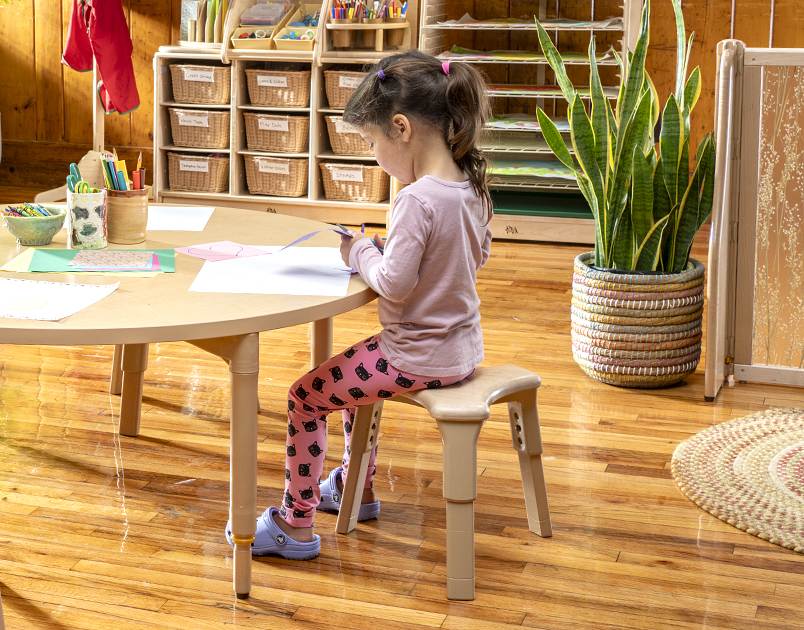
Young children learn best through active play and movement—this is something every early childhood educator knows instinctively. Yet when children do need to sit for certain activities, the seating we provide can either support their development or work against it. Understanding the science behind how children sit can help us make better choices for those moments when seating is necessary.
The Problem with Traditional Classroom Chairs
Walk into most early childhood classrooms and you'll see the same thing: small chairs with right-angle designs that mirror adult furniture. These chairs ask children to sit with their hips, knees, and ankles all at 90-degree angles—what's known as the "reference posture." But here's what many educators don't know: this posture was never meant to be ideal for sitting. It was developed simply as a standardized way to measure bodies for design purposes. Dr. A.C. Mandal, who challenged conventional seating design, pointedly noted that no one has ever established a scientific connection for why this became the standard sitting posture.
The reality? Children cannot maintain this upright static posture for longer than one to two minutes. When we ask them to sit this way, we're fighting against their anatomy.
What Happens When Children Sit in Traditional Chairs
When a child sits in a right-angled chair, their pelvis rotates backward, flattening the natural curve of their lower back. This changes the lumbar curve from the healthy standing curve to a slouched position. To maintain an upright posture requires significant muscle exertion—which is why children inevitably slouch.
This slouched posture creates a cascade of problems:
- Increased spinal pressure: When a child is slouched over their desk, the pressure on their spinal discs is nearly double that of when they are standing. These high pressures over time can cause degeneration of spinal discs, and by the time back pain occurs, the damage is often already done.
- Restricted breathing: A slouched position compresses the lungs and diaphragm, reducing lung capacity
- Digestive issues: Compression of the abdomen can slow digestion and cause discomfort
- Decreased focus: Physical discomfort is distracting, and poor posture affects mood and energy levels
- Long-term consequences: Poor postural habits established in early childhood can lead to chronic musculoskeletal problems later in life
Poor posture can lead to decreased concentration and cognitive performance, partly because discomfort is distracting and partly because a slouched posture affects mood and energy levels.
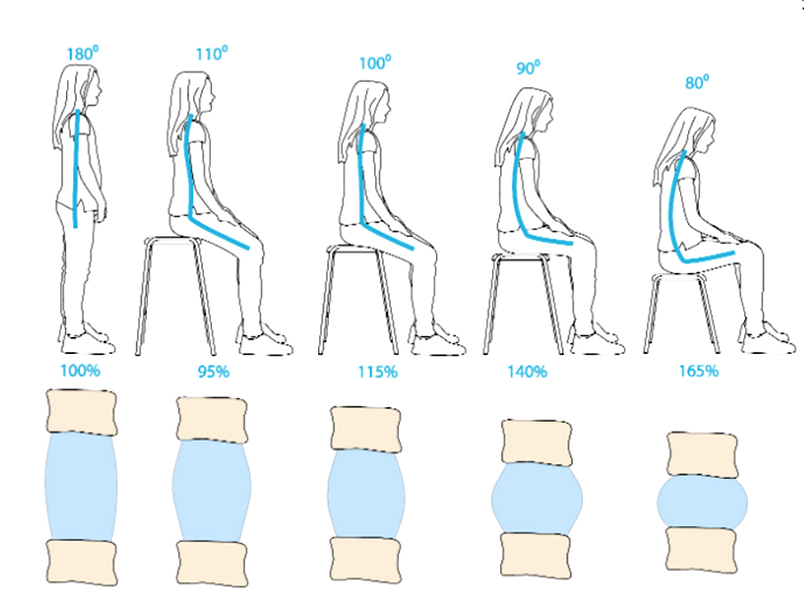
Seating height directly impacts the pressure on spinal discs and by extension posture.
The Movement Connection
The issue goes deeper than just comfort. Movement can enhance thinking and learning by triggering physiological changes such as increased blood flow to the brain and changes in brain chemicals like dopamine and noradrenaline.
When children are locked into static, restrictive seating, they lose opportunities for the kind of small, non-locomotor movements—bending, stretching, twisting—that support their developing vestibular and proprioceptive systems. These systems are essential for balance, spatial awareness, and body control. Good posture has been linked to improved memory performance and better communication between important brain areas.
For children with ADHD or other neurodiverse needs, the impact is even more pronounced. While every child is different, restrictive seating can make it harder for some neurodivergent students to focus. But the truth is, all children benefit from seating that allows freedom of movement and gives them more control over their posture.
Why This Matters in Early Childhood Settings
Early childhood is when children develop the gross motor skills, core strength, and postural habits they'll carry throughout their education and into adulthood. Every experience shapes these developing systems.
Gross motor skills form the foundation for more complex movements and are essential for healthy growth, ensuring children develop strong muscles, bones and joints. When we provide seating that requires children to engage their core muscles for balance and allows them to move freely, we're supporting this crucial development rather than hindering it.;
A Better Approach: The Science of Alternative Seating
In the 1970s, Dr. A.C. Mandal began advocating for what he called “dynamic seating.” His research, building on earlier biomechanical studies, showed that the natural resting position of the hip joints occurs when there is an angle of about 135 degrees between the torso and thighs—much more open than the 90-degree angle of traditional chairs.
At this angle, muscles are in a relaxed, balanced state, and the spine maintains its natural healthy curve—similar to the posture of someone riding a horse. This is why alternative seating solutions often feature:
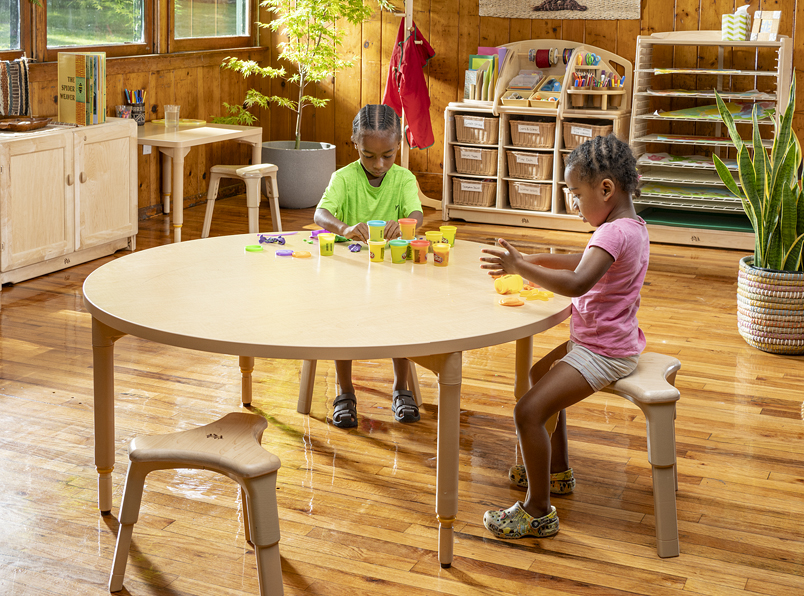
- Elevated seat height with forward-sloping or saddle-shaped seats
- Open hip angle allowing the thighs to fall away from the torso
- Feet firmly planted on the floor for stability and balance
The Benefits of This Design
When children use seating designed around these principles, several things happen:
Physical comfort: The pelvis remains in a more natural position, maintaining the healthy lumbar curve. There's no compression of internal organs, allowing for deeper breathing and better digestion.
Accommodates size variation: When the seat is positioned higher and thighs are allowed to fall away from the torso, the exact height becomes less crucial as it accommodates a far larger range of sizes. Shorter children can perch with straighter legs; taller children have more bend at the knee.
Movement while seated: When sitting in a riding position, the position of the feet in a wide stance helps maintain balance and allows non-locomotor movements, allowing a person to be more active while sitting. Children can twist, turn, and shift their weight—following the teacher around the room, engaging with materials, and staying alert. This may even address the age-old problem of children dangerously rocking back in their chairs, which is often a desperate attempt to gain relief from uncomfortable, static postures.
Easier transitions: The open, balanced posture means children can quickly move from sitting to standing and back again, supporting the active learning style natural to early childhood.
Implementing Alternative Seating Thoughtfully
It's important to emphasize: alternative seating is not about increasing seated time for young children. Active play and movement remain the foundation of early childhood learning. But for those times when children do need to sit—at tables for focused activities or during meals—providing seating that supports rather than restricts their development makes a significant difference.
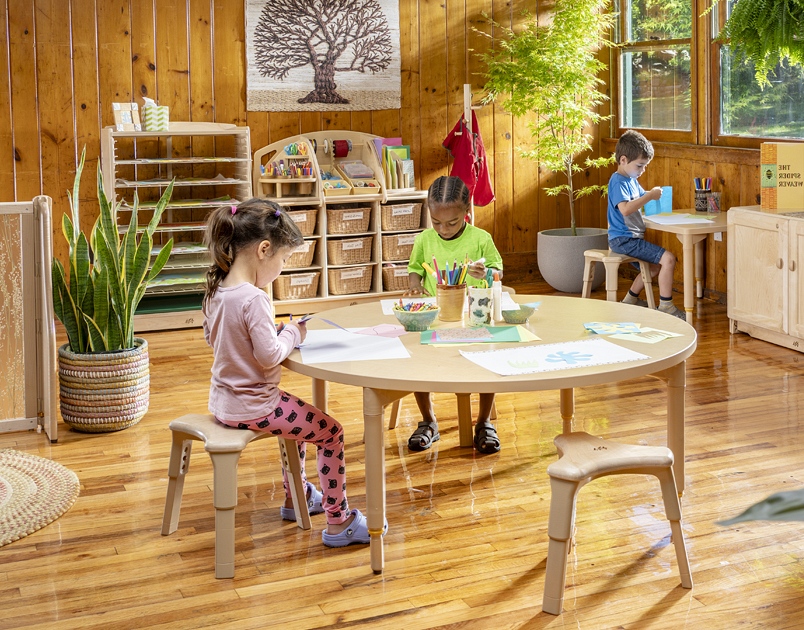
Some children may take time to adjust to stools or alternative seating options, as they need to engage their core muscles for balance. This is actually part of the benefit—they're strengthening those crucial stabilizing muscles. You might notice that some children initially use these seats for shorter periods and gradually build up their stamina.
Looking Forward
Today's children are growing up in a world that poses many challenges to their development, with detrimental impacts from factors such as increased technology use and sedentary lifestyles. While comprehensive solutions are needed, improvements to classroom seating represent one concrete step educators can take.
Seating that is tailored to the developmental needs of young children helps build core strength, develop motor skills, and set healthy postural habits for the years to come. When we provide opportunities for movement rather than restricting children to unnecessarily static positions, we help counteract the many environmental factors challenging their ability to thrive.;
The goal isn't to create a classroom full of perfectly still, upright children. The goal is to support children's natural need for movement even during seated activities, building strong bodies and focused minds that are ready for whatever comes next in their learning journey.
References
This article draws on research from FIRA International's white paper "Ergonomics: Rethinking Classroom Seating," which synthesizes findings from fields including education, child development, biomechanics, and neuroscience.