Reflecting on Rainy Day Activities
Ten Rainy Day Activities
| June 2026Wet weather? Don't miss the fun outside!
Rainy weather happens, but that is no excuse to stay inside! Wet days offer a deluge of new experiences that are not to be missed (apologies to all you readers from drier climates). I’m sure other climates can think of ways to incorporate these ideas without wasting precious water, too.
To get the most enjoyment out of the weather, children should be dressed appropriately in rain gear and boots. There’s no such thing as bad weather—only inappropriate clothing! Of course, use common sense, and don’t go out if there's a chance of lightning or severe weather. The following ten ideas will get you started. There’s no end to the possibilities—it just depends on how wet you’re willing to get!
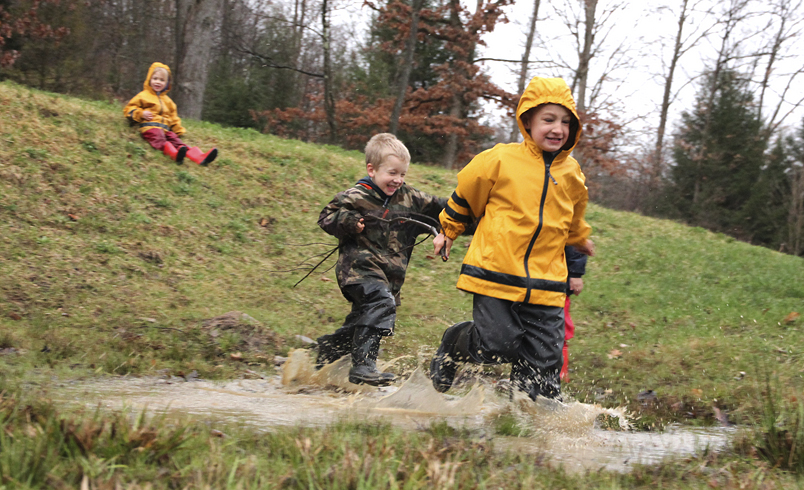
1. Jump in Puddles
Sometimes it’s the simplest things that produce the most fun! Every kid enjoys seeing how big a splash he can make. Go on a walk and see who can find the biggest puddle. Play follow the leader—go around, jump over, or wade through puddles.
2. Become meteorologists
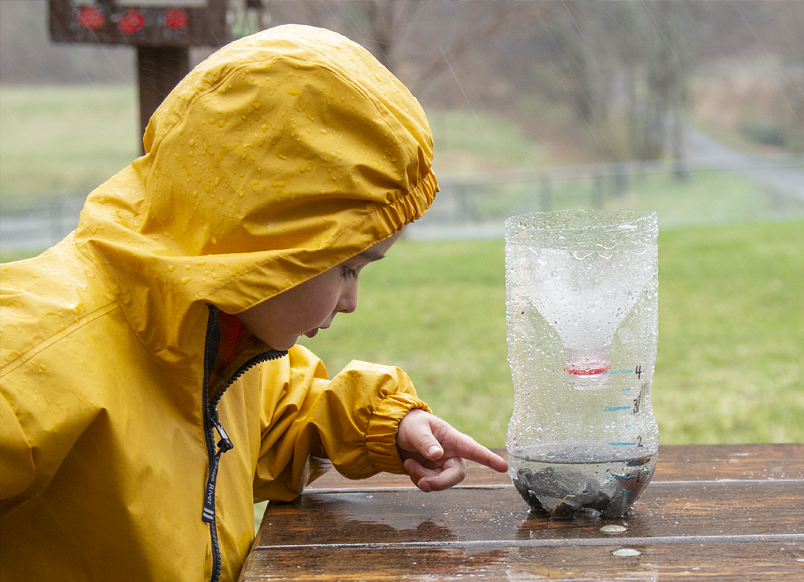
Measure and chart the amount of rainfall. Simply put a plastic cup out in the rain or use a cut-off plastic bottle to make a rain gauge. Mark measurements on the side, and check it throughout the day. Daily weather checks can be graphed with stickers on a chart outside. Checking the weather when children can’t see and be in it is not ideal. They crave and need full body experiences!
3. Experiment with Rain Art
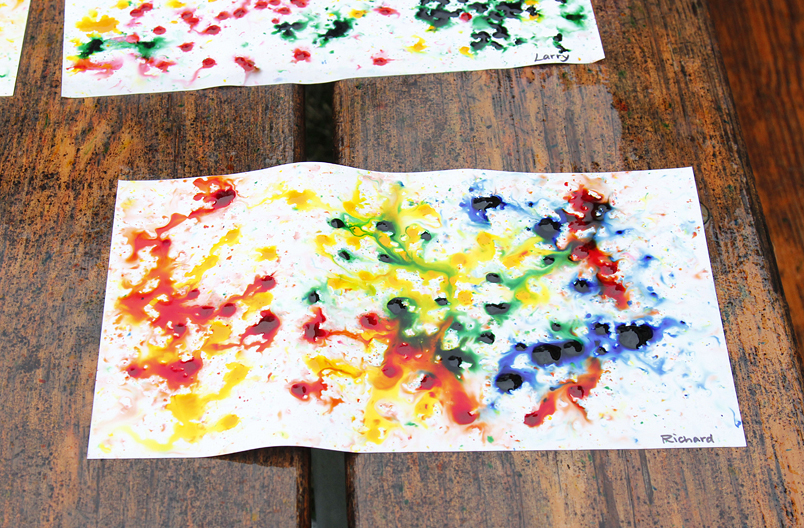
Sprinkle a heavy piece of paper with food coloring or powdered tempera paint, set it out in a light rain, and watch the colors blend and run. This is real “watercolor” art! Try drawing on wet cement with sidewalk chalk for an effect that’s very different from dry chalk.
I have done this activity with children ages 2–6 in every type of program. Writing each child’s name on the paper in pen ahead of time and placing the paper on a tray can help keep things organized for those who wish to participate. Some children will want to do the activity over and over, so be prepared with pre-made papers labeled with names. This activity is especially good during a week of rainy weather so everyone gets a chance to participate and enjoy it fully if they really like it.
Do this activity often, and change the colors to match the season. The finished artwork can be used as a backing for bulletin boards. You can also make mural-sized pieces for several children to work on together, or large sheets for groups of two or three. While you will get many beautiful results, you will also sometimes end up with shades of brown as the colors mix together. Think of the possibilities for future projects, such as skin-toned handprints or self-portraits.
Using wax crayons before the experiment with tempera paint and rain will create designs that resist the watercolors and show through the finished artwork.
4. Make Rain Music
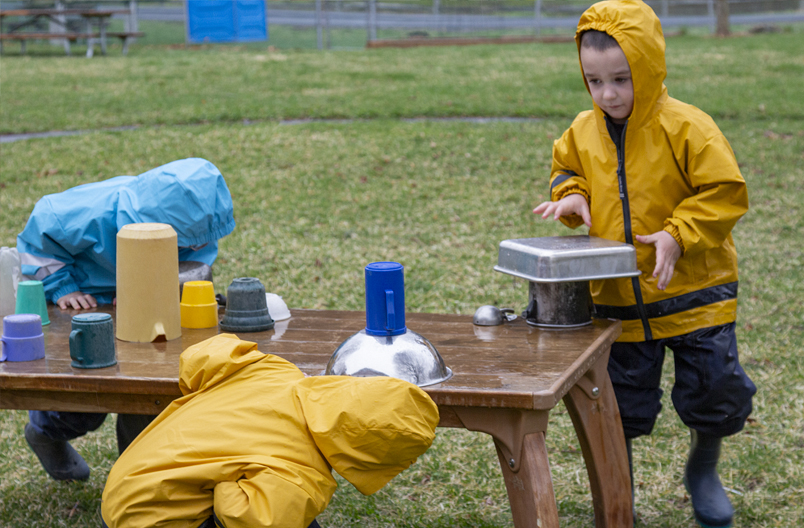
Spend a few minutes simply listening to the sounds of the rain. Then set out various objects and containers to discover how water droplets sound when they hit different surfaces.
This activity is especially enjoyable if you have a covered area or a large umbrella to share. Children can sit and listen, then run out to change the placement of the various items they choose to experiment with. Encourage language development by naming the different sounds they hear, such as plops, drips, and splashes. You can also sing the old tune, “It’s Raining, It’s Pouring” or invite children to create a rain song of their own.
This activity works best in small groups of four or five children, allowing them to come and go and return as their interest continues.
A wonderful companion book for this activity is Listen to the Rain by Bill Martin Jr. and John Archambault.
5. Float boats
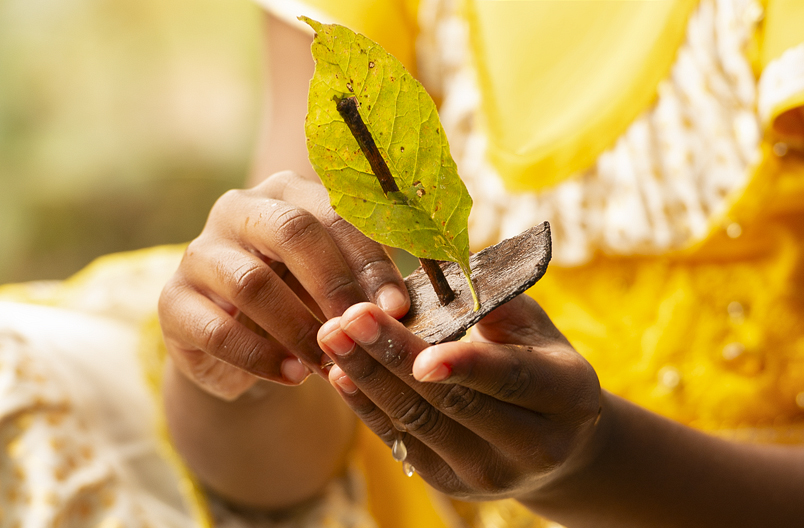
Sticks, bark, and leaves all make great boats. Try floating them in a puddle or a fast-flowing gutter.
Plastic gutters work especially well for this activity because children can move and manipulate them to create simple or more complex waterways using stumps, hills, or other natural landscape features. Boats can be made from natural items such as bark and leaves, or from materials like foil or waxed paper. Using sturdy materials will help the boats last for a day or two of continued play.
You can also create a boat-building center indoors where children can design and save their boats for rainy days or for use in homemade waterways created for sailing activities.
6. Feel the rain
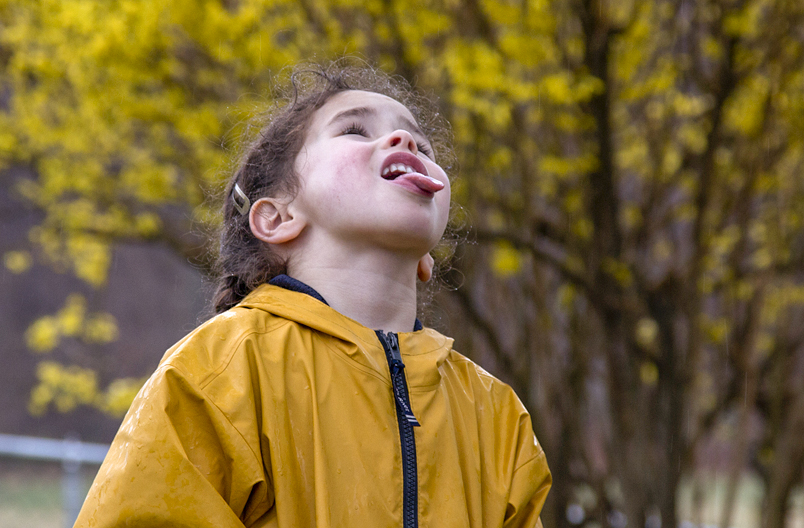
Try catching the rain in your hands, on your face, or on your tongue. What does it feel like? What does it taste like? Encourage children to engage all five senses as they explore the experience of rain.
This activity offers many opportunities for language development. Invite children to dictate their thoughts and observations, then encourage them to draw, write, sing, or create poetry inspired by the sensory experiences they describe.
You can also sing songs together, such as:
“If all the raindrops were lemon drops and lollipops,
Oh, what a rain that would be!”
Another favorite is walking around with mouths open wide while singing only the vowel sounds of the tune—“ah ah ahah, ah ah ah, ahah”—using mostly throat sounds instead of words. Children usually love this playful variation!
7. Smell the rain
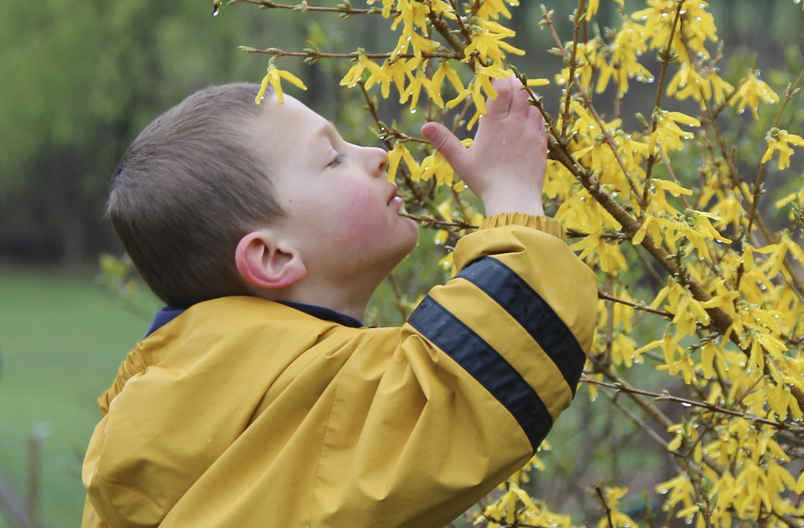
Give children time to absorb and enjoy the refreshing aroma of fresh spring rain hitting dry earth. There is even a word—and scientific research—to describe this distinct smell: Petrichor.
Smells often connect strongly to memory. For example, the smell of melted crayons may bring back memories of a grandmother’s backyard, or the scent of tomato plants brushed against in a garden may remind someone of childhood summers. Encouraging children to notice and talk about these connections can deepen the sensory experience.
Some sensory activities work best in very small groups. Excitement and the desire to touch everything while exploring smells can sometimes become overwhelming, and the goal is to encourage curiosity rather than create a control issue. Setting up the activity thoughtfully and being aware of your own limits, as well as the children’s levels of curiosity and excitement, can help make the experience enjoyable for everyone.
8. Play in the mud
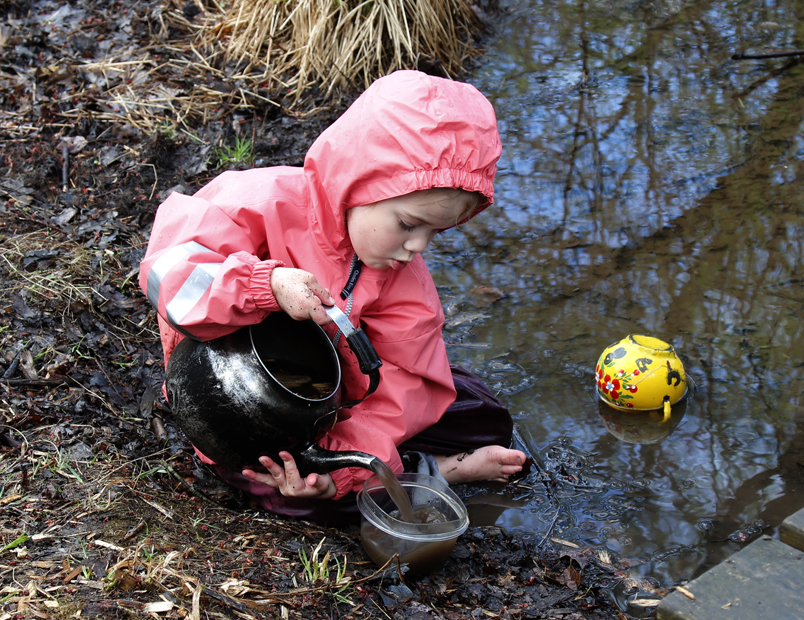
Rain plus dirt makes the world “mud-luscious” and nearly irresistible, especially if you are anywhere near four years old. Provide a few containers, and you may be surprised by all the things children cook up in the mud kitchen.
You do not have to wait for a special “Mud Day” to offer this experience. Bring some of those muddy play opportunities back by creating mud tubs for children to explore, especially if you do not have a regular outdoor mud kitchen or designated muddy play area. Mud play encourages creativity, sensory exploration, and imaginative social play in a simple and natural way.
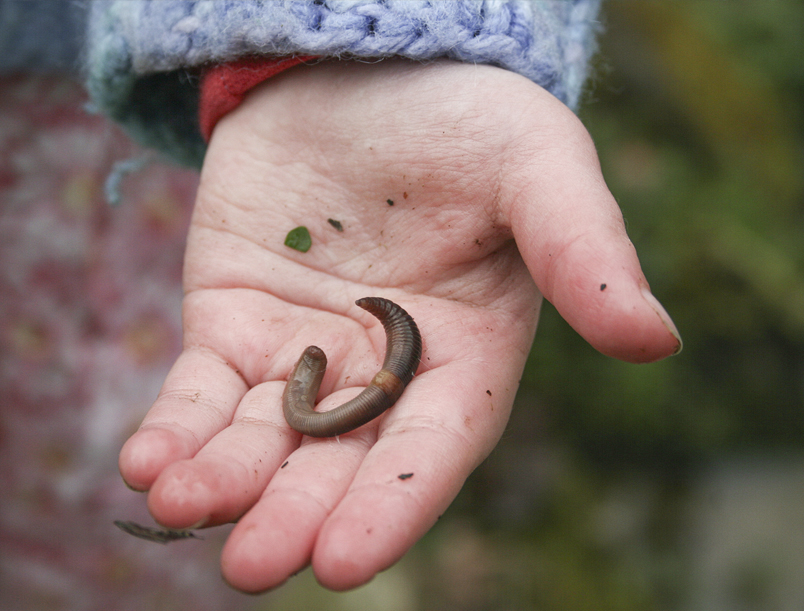
9. Go on a worm hunt
As the soil becomes saturated with rain, worms often move to the surface. Children love to “rescue” stranded worms by gently moving them off sidewalks and back into the soil.
You can make the experience even more engaging by creating songs and chants about what the children are doing. For example, to the tune of “My Favorite Things”:
“Bike hikes and lake hikes and worms in the yard,
These are a few of our favorite things!”
Making up songs together helps children celebrate and remember these simple wonders of childhood. Worms can also often be found between wet leaves, and sometimes children may discover an entire group of them together.
Unless you are planning to create a worm farm, it is usually best to leave the worms outdoors where they belong. Most children truly enjoy these close-up nature experiences; it is often adults who feel more hesitant or uncomfortable around worms.
Nick Terrones, an early childhood educator and published author, discusses children’s curiosity about worms in his book Can of Worms. His work explores how adults can respond thoughtfully to children’s difficult or unexpected questions.
10. Look for the rainbow
If the sun comes out as the rain subsides, make sure you don’t miss the rainbow. Take walks to notice what wonders are right in your own neighborhood and immediate surroundings.
A poem I have had in mind for 40 years goes like this:
“I have to have a stick when I go walking down the street,
To poke in holes and skim along the fences that we meet.
My father (teacher) says I have to have a stick with me—
I… cannot… walk without it!”
Walking and noticing small details in the environment can turn an ordinary rainy day into an adventure full of discovery.