Ten Favorite Math Activities Outdoors
Math Play with Loose Parts
| September 2026Simon Nicholson first coined the term “Loose Parts” to describe objects in an environment that are open-ended, inspiring creativity and discovery. One area of early learning particularly suited for the use of these materials is math. Natural loose parts can be used in a multitude of mathematical ways.
Outside our window stands a large Tulip Poplar tree. In spring, petals rain from its yellow and orange blossoms. In summer, it shades the yard with green leaves. And in fall, crunchy brown leaves and tiny cones blanket the ground. This one tree provides an abundant supply of natural loose parts for young children to gather and explore.
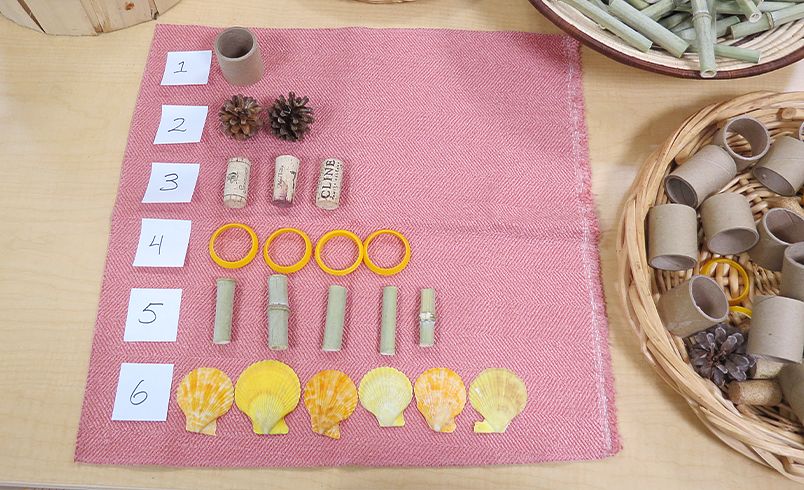
These natural loose parts are accessible in almost every neighborhood, and can mostly be gathered for free, making them a perfect material for teaching. An assortment of pinecones can be used for classifying, sorting, and counting. Leaves can be used to investigate shape and symmetry. Rocks can be measured and compared by weight or size. All the foundational areas of early math can be explored in a playful way using natural loose parts.
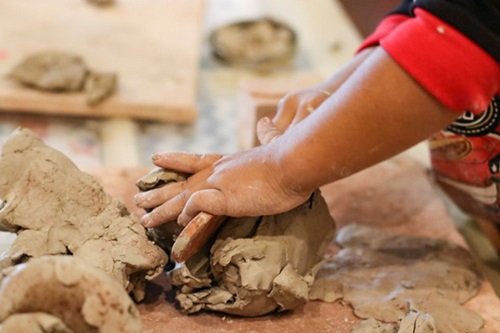
In my many years of teaching I have found that provoking a young child’s interest in math comes easily when natural loose parts are offered. Children seem drawn to materials that are real and treat them with great interest and care. Not only does this encourage the child to be an active explorer in their outdoor environment, it also strengthens children’s connections with the natural world.
Once you've collected these natural loose parts, there are a myriad of questions that can be asked to guide children’s thinking. Questions like “What did we find the most of?” “Tell me about your stick.” “Can you find something longer?” “Which rock is heavier?” introduces rich math language that becomes part of the child’s vocabulary.
1. Create Shapes
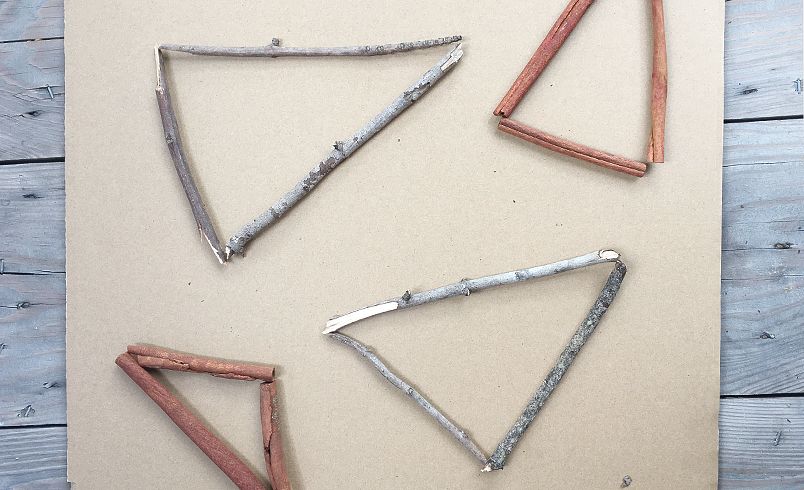
Create shapes using twigs, sticks or pods. Try to make triangles that are different sizes and shapes. Challenge yourself to make a hexagon or an octagon.
2. One-to-One Correspondence
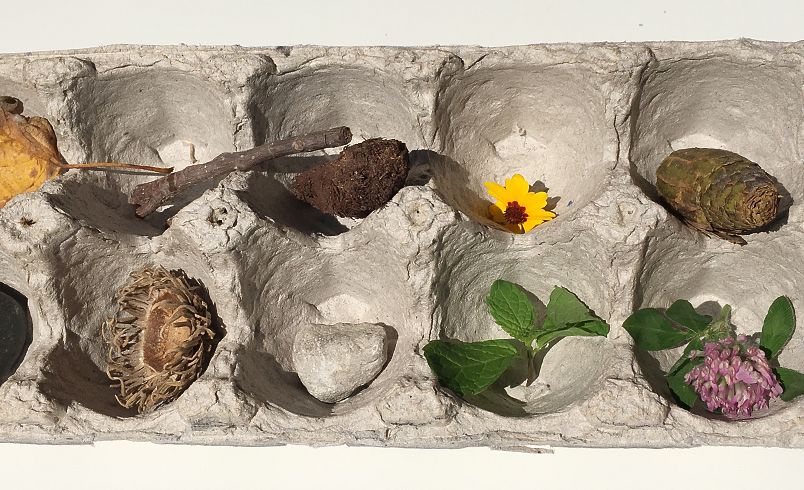
Go on a nature hunt using an egg tray to collect your findings. Ask the child to place one item in each cup, thus reinforcing their one-to-one correspondence.
3. Search for Four-Leaf Clovers
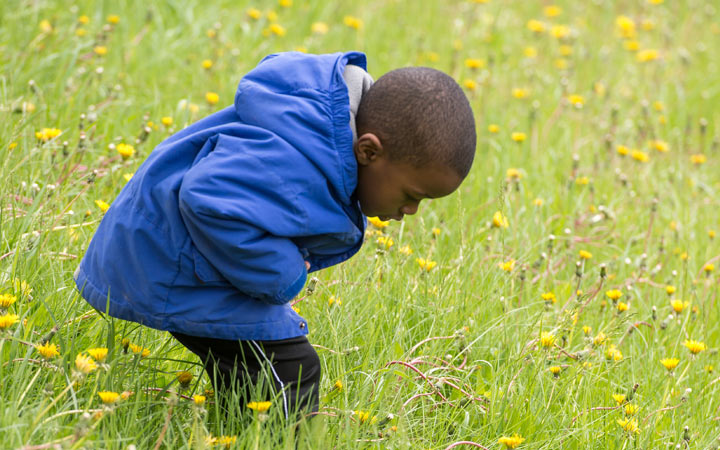
Search for four-leaf clovers in the grass, Children may show their early ability to subitize as they quickly scan a patch of three leaf clovers, searching for the lucky one with four leaves.
4. Sorting
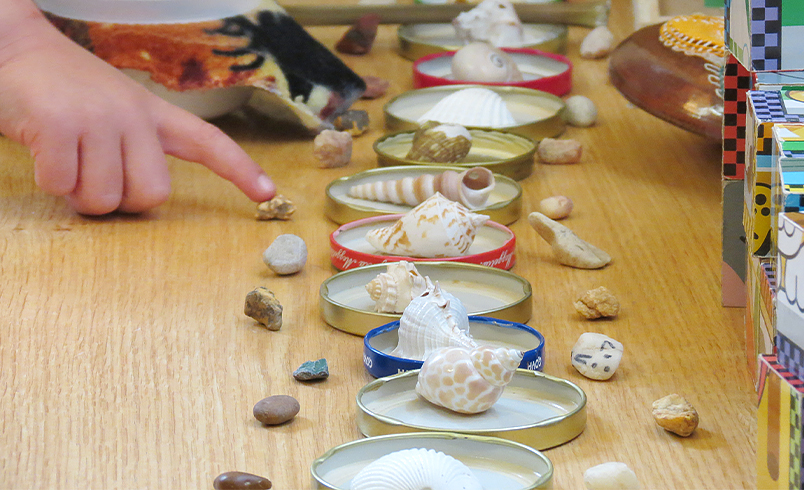
Sort seashells or other natural materials by variety, size, color, or shape. Then mix them back together and sort in another way.
5. Matching
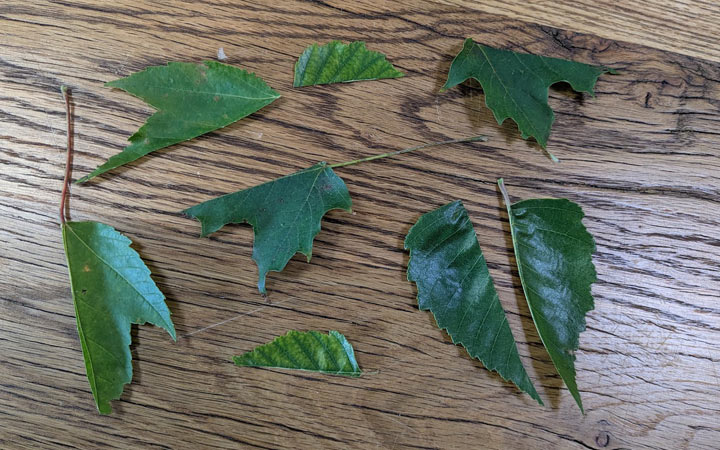
Cut leaves in half and ask children to put the pieces back together. Ask the child to consider which half matches the other and how they know they are right.
6. Multisensory Numerals
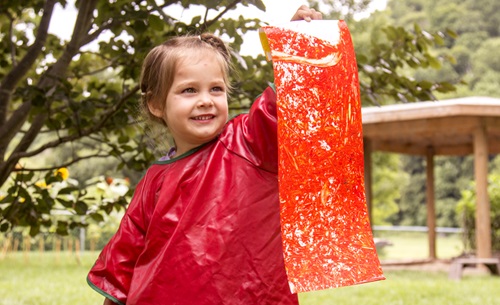
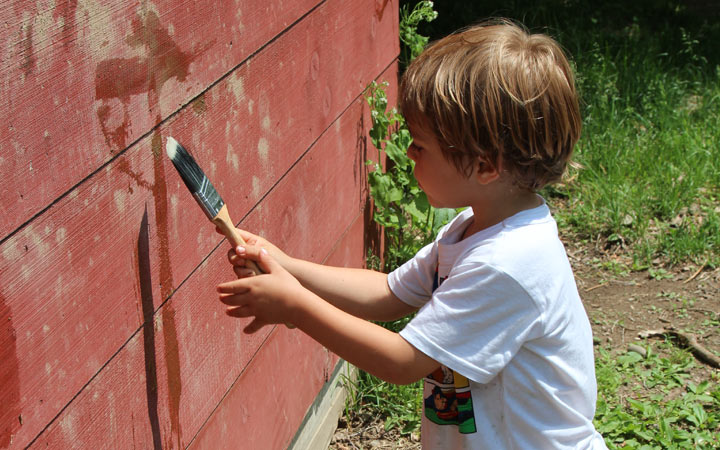
Practice writing numbers using paintbrushes and water on concrete. Because water evaporates quickly, children can practice without fear of making mistakes.
7. Patterns
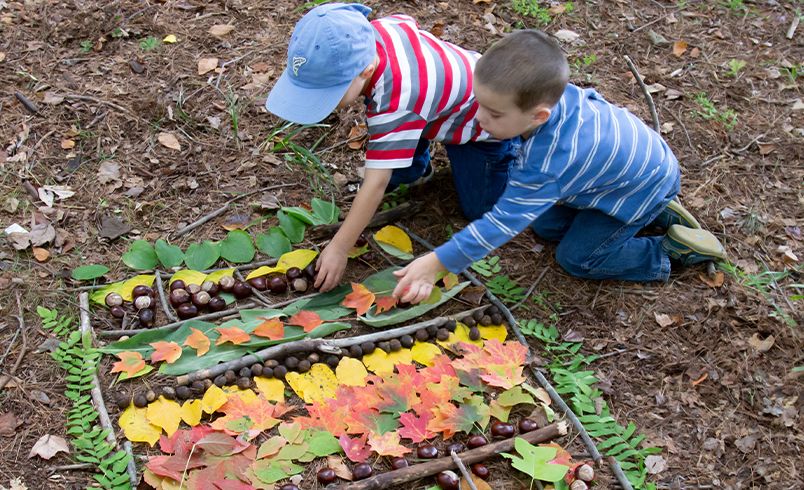
Create patterns with a collection of nature items. Begin by asking the child to copy or extend your pattern, and when they are ready, create a pattern of their own.
8. Nature Faces
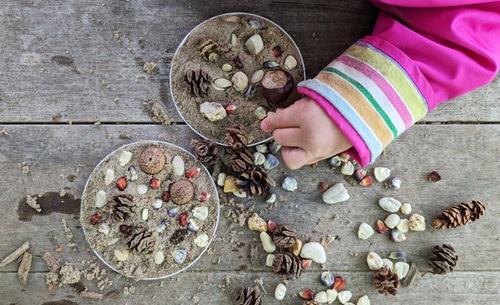
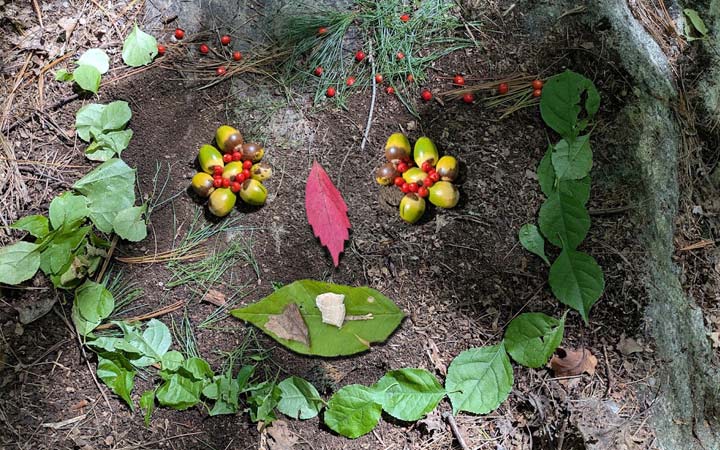
Draw an oval on the ground using chalk. Then use a variety of loose parts to create a face. Count the items you used to make the eyes, ears, nose, mouth and hair. Make up a story about the face. Is it a reflection of yourself or someone else?
9. Measure and Compare
Find a stick, then ask the child to find one that is longer or shorter. Each time they find a new stick, hold it up to the other one and compare. Finally, lay all the sticks on the ground and order them by size.
10. Nature Counting
Search for tiny wild flowers or weeds, like dandelions and clovers, then bundle them into groups of five or ten. Finally, count by fives or tens to see how many you have altogether.