Classroom Design for Emotional Regulation
| December 2025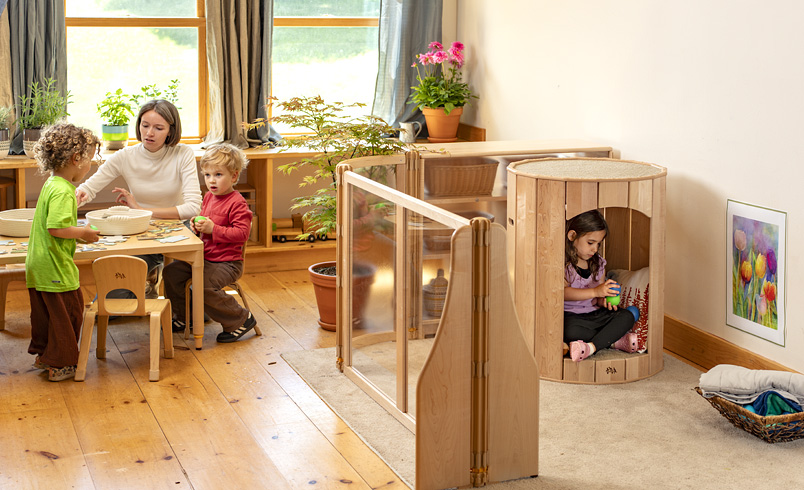
Walk into any thoughtfully designed early childhood environment and you can almost feel the energy before you see it. There’s a sense of calm, purpose, and invitation. The hum of children playing and learning together feels organized, not chaotic. The environment itself seems to offer gentle cues about where to go and how to feel.
When designed with intention, the classroom environment supports emotional regulation, safety, and independence. Intentional classroom design is the silent teacher that shapes behavior and nurtures every aspect of learning.
The Flow of the Space
Let’s take a walk through a classroom designed with children’s developmental and emotional needs at the center.
Entryways are often underestimated in classroom design, yet they’re some of the most emotionally charged spaces in a child’s day. Entering or leaving the classroom are moments when children’s nervous systems are most active. This first impression sets the tone for safety and belonging—two emotional anchors that children rely on before they can fully engage in learning.
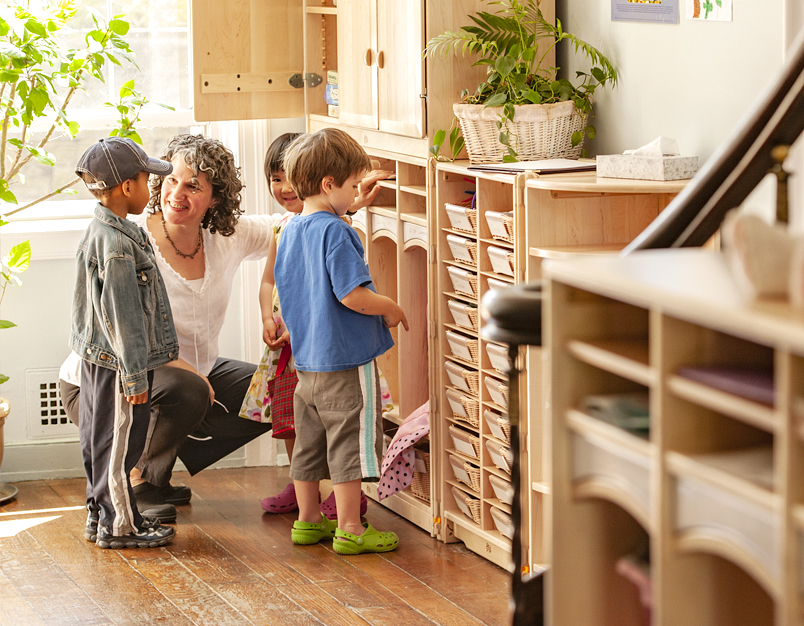
A well-designed entryway helps children move between home and school with ease. It might include:
- A calm color palette and soft lighting to prevent sensory overload when walking in
- Clearly defined cubby spaces with photos or name labels to build ownership and identity
- A small visual “welcome routine” posted at eye level (e.g., “Hang your bag, wash your hands, choose your greeting”)
- A calm-down space nearby for children who need a few minutes to adjust
Arranging Interest Areas to Create a Natural Flow
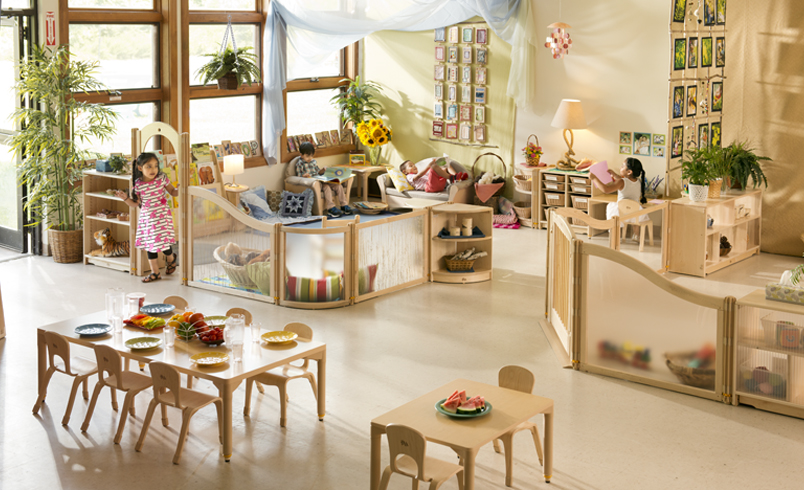
From the entry, the space opens into a carefully considered arrangement of “interest areas.” These areas are more than just play zones. They’re invitations for children to explore, interact, and regulate their energy levels.
Active areas such as blocks and dramatic play are often placed near each other. These spaces naturally lend themselves to movement, social negotiation, and noise! Grouping them together keeps that energy in one part of the room.
Quiet areas like library, writing, or art centers are located on the opposite side, buffered by furniture or shelves that subtly signal a shift in tone. This creates natural “flow zones” within the room—places where children can transition from high-energy play to calm, focused engagement without feeling an abrupt change.
Discovery or science areas are often near natural light sources or sensory tables, connecting children to textures, sounds, and materials from nature.
The meeting or circle area anchors the community. It’s often placed in a central, open location that allows for visibility and easy access for all.
Each of these design decisions isn’t accidental. It’s rooted in an understanding of how young children experience their environment. A child’s sense of regulation and focus can rise or fall based on how easily they can navigate space and anticipate what’s expected. These design choices signal consistency and predictability, which are key supports for emotional safety.
Designing to Prevent Overstimulation
In many classrooms, overstimulation can be one of the biggest barriers to emotional regulation. Too many colors and visual clutter can make it difficult for children to focus, increasing anxiety or impulsivity.
Teachers often feel pressure to make their rooms look “busy” or “educational,” believing that a highly decorated space shows engagement and effort. However, for young children still developing sensory processing and attention skills, too much visual information can have the opposite effect.
An effective classroom design balances stimulation and serenity. Instead of covering every wall with displays, teachers can use purposeful, simplified visuals that reinforce learning goals. For example:
- Display children’s artwork at eye level rather than crowding bulletin boards from floor to ceiling
- Use neutral or soft background colors on walls so materials, student work, and family photos can stand out meaningfully
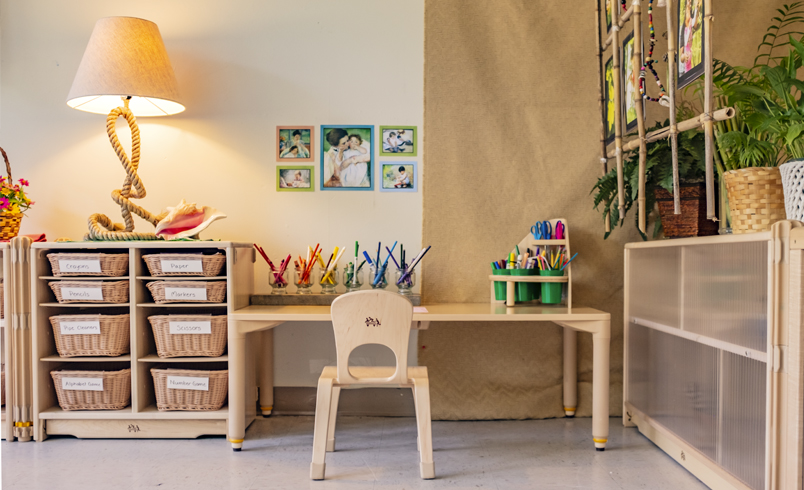
- Keep materials organized in labeled baskets or bins to support predictability and reduce cognitive load
When children know where things belong and what to expect in their surroundings, they experience two key ingredients for self-regulation: a sense of control and safety.
The Role of Sensory Design
Sensory design is one of the most powerful, yet often overlooked, elements of classroom setup. Everything from lighting and texture to scent and acoustics affects how a child feels in a space.
Lighting: Harsh fluorescent lighting can lead to restlessness or headaches. Whenever possible, classrooms benefit from soft, natural light. Lamps, string lights, or diffused lighting can create a warm, home-like ambiance.
Textures: Offering a mix of smooth, rough, soft, and natural textures—like wooden blocks, woven baskets, soft pillows, and fabric curtains—grounds the sensory experience. These tactile experiences help children regulate through touch, which can be calming and centering.
Sound: Consider how sound travels through space. Carpets, curtains, and soft materials absorb noise and reduce echo, creating a gentler auditory environment. Strategic use of calming background music during clean-up or rest time can help signal transitions and support routines.
Scents and Air Quality: A classroom that smells fresh and clean, without artificial fragrances, supports both physical comfort and emotional calm. Children are highly sensitive to smell. Simply opening a window or two can provide a neutral or natural scent environment that communicates safety and care.
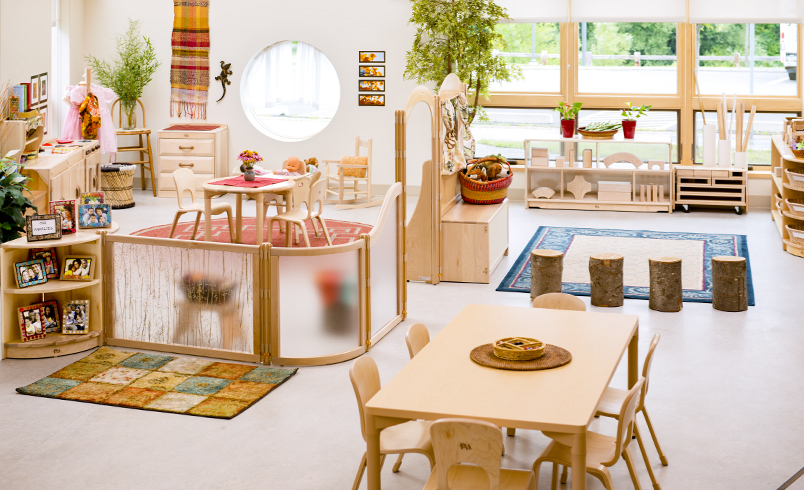
Quantity of Materials Accessible at One Time: One of the most impactful yet underutilized aspects of sensory design is the quantity of materials children can access simultaneously. More choices does not result in more engagement. The opposite is often true for young children. When shelves are overcrowded with materials, children can experience what psychologists call “choice overload” or “decision fatigue.” Their developing brains simply aren’t equipped to process too many options at once. They may flit from one item to another, instead of diving into meaningful play. To effectively contain materials, use shelving with doors or curtains that blend seamlessly into the classroom environment.
The benefits of refining accessible materials include:
- Reduced decision fatigue. Fewer choices mean children can actually see and consider their options clearly, rather than feeling overwhelmed by visual noise and endless possibilities.
- Deeper engagement. Children are more likely to spend twenty minutes building an intricate block structure instead of two minutes each at ten different activities. This sustained play is where children develop problem-solving skills, creativity, and emotional regulation through focused attention.
- Better focus. A thoughtfully curated selection (perhaps eight to ten options per interest area) creates an environment that feels purposeful and inviting—not sparse or boring.
- Easier cleanup and organization. When children know exactly where each item belongs and can clearly see the “home” for each material, they develop a sense of order and responsibility. Returning materials to their designated spots becomes a calming ritual rather than an overwhelming chore.
- Intentional alignment with learning goals. Teachers can rotate materials every few weeks to maintain novelty and interest while keeping the overall number manageable. This approach allows educators to be more strategic about what’s available, aligning materials with current themes, developmental goals, or children’s emerging interests.
Together, these elements shape the invisible emotional rhythm of the room. A child who feels overwhelmed might instinctively gravitate toward a cozy nook with soft textures and dimmer light—a sensory cue to slow down. Another might feel energized by bright natural light and engaging materials in an interest area designed for exploration. And when the materials themselves aren’t competing for attention, children can truly immerse themselves in the joy of discovery and play.

The Classroom as the Silent Teacher
When all these elements come together, the classroom itself becomes an active participant in the teaching process.
This idea, often referred to as “the environment as the silent teacher,” recognizes that children are in constant interaction with their surroundings. The classroom “teaches” through structure, rhythm, and atmosphere.
A classroom that promotes emotional regulation doesn’t just reduce chaos—most importantly, it increases connection. Children learn how to navigate spaces that respect their needs. They internalize routines that support independence. They develop emotional awareness by responding to cues embedded in the classroom environment.
For teachers, an intentional classroom design also fosters smoother transitions, fewer behavioral challenges, and a greater sense of shared purpose. When the physical environment works with you, not against you, children’s emotional regulation naturally improves.
Pulling It All Together
Designing a classroom for emotional regulation and learning isn’t about creating a Pinterest-perfect setup. It’s about creating a living system that supports both children and teachers. It’s the thoughtful arrangement of materials that prevents conflicts before they begin. It´s the use of light, texture, and sound to help little nervous systems stay balanced. It´s the welcoming entryway that tells each child, “You are seen, you are safe, and this space was made for you.”