Movement: A Child's First Tool for Regulation
What Every Wiggly, Crashing, Shutting-Down Child Is Trying to Tell You
| July 2026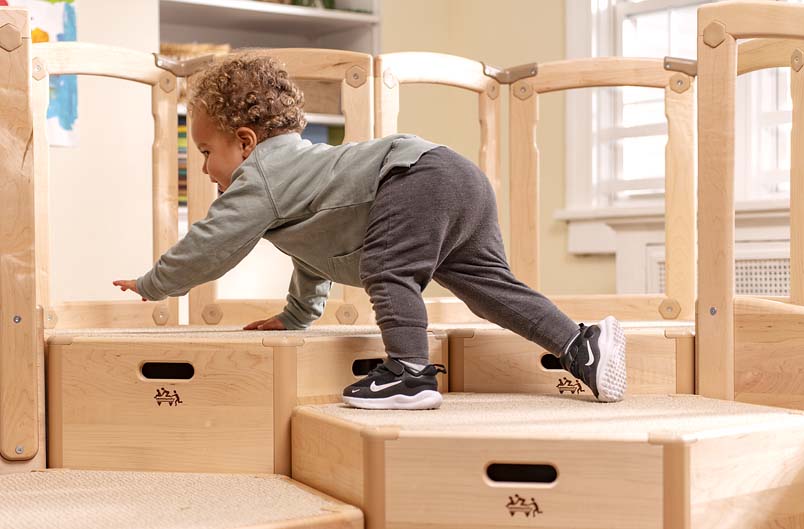
You know the child. Maybe you’ve taught one. Maybe you’ve raised one. Maybe you, if you’re being honest, are a grown-up one.
She can’t stop touching things. She bumps into classmates, knocks over her cup, and seems to have no idea how hard she’s hugging the dog.
He spins in circles for what feels like hours, crashes headfirst into the couch cushions, and craves jumping on everything. Or maybe he’s the opposite: hesitant on the playground, refusing to swing, melting down in a loud gymnasium, plugging his ears in the grocery store.
These children are not misbehaving. They are not defiant. They are not “just like that.” Their bodies and brains are working harder than most of us realize, and they are desperately using the tools available to them to feel okay.
And those tools—the crashing, the spinning, the avoiding—are movement, or the lack of it.
We Are All Sensory Beings
Here is something important to understand: Sensory processing is something every human nervous system does. It describes how the brain receives, organizes, and responds to information from the senses. While some children may receive diagnoses related to sensory challenges, sensory processing itself is a universal human function, not a condition reserved for a particular group of people.
Some of us are highly sensitive, picking up on every sound, texture, and flicker of light. Some of us are sensory-seeking, needing more input than the average environment provides. Some of us switch between the two depending on the day, the level of stress, or how much sleep we got. Very few of us sit right in the comfortable middle, processing everything perfectly and efficiently all of the time.
Children whose nervous systems are still developing are even more variable. The child who seems like “too much” and the child who seems like they’ve “shut down” are both doing the same thing: responding to the demands of a nervous system that is not yet regulated.
And the single most powerful tool we have for helping regulate a child’s nervous system is also the most natural, the most available, and most frequently taken away when behavior gets hard: Movement (Lane et al. 2019).
Our culture has long treated the body as simply a vehicle for the brain—something to be kept still and quiet so the “real work” of thinking can happen. Decades of research in neuroscience and occupational therapy have made it abundantly clear that this is backward. The brain does not regulate itself in isolation. It regulates itself through the body, and movement is the primary language the brain and the body use to talk to each other (Guardado and Sergent 2023).
The nervous system is vast and complex, but three movement systems especially important here. They operate largely below our conscious awareness. Watching them through the lens of a struggling child can change the way you see behavior entirely.
Proprioceptive System
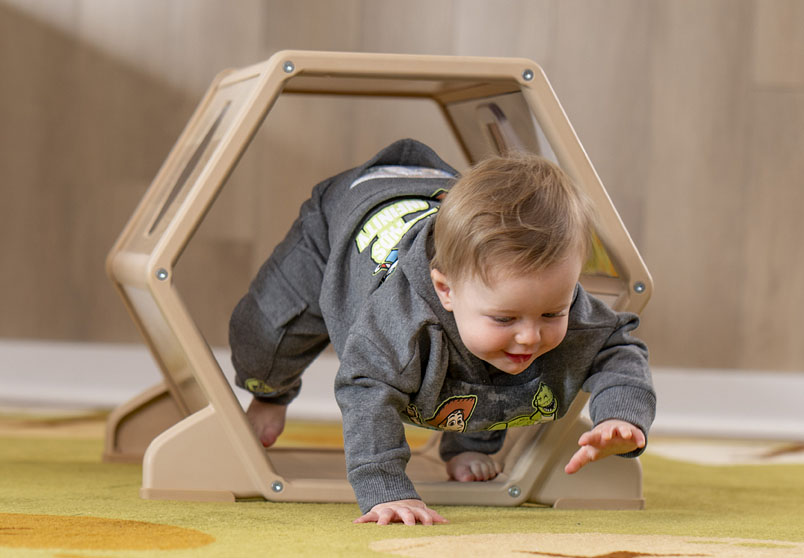
The proprioceptive system lives in the muscles, tendons, and joints. It tells the brain where the body is in space and how much force is being used (Guardado and Sergent 2023). Every time a child pushes, pulls, lifts, climbs, or carries, proprioceptive information floods the nervous system. This input has a profoundly organizing and calming effect. Occupational therapists call it “heavy work,” and for good reason: it works like ballast, steadying a nervous system that is spinning out of control.
Vestibular System
The vestibular system lives in the inner ear. It governs balance, spatial orientation, and the body’s sense of movement through space (Lane et al. 2019). It is also a kind of data management center—helping the brain filter relevant information from irrelevant noise. When the vestibular system is well-regulated, a child can tune out the hum of the air conditioning and attend to the teacher’s voice. When it is poorly regulated, every sound, movement, and visual input arrives with equal urgency. The world becomes overwhelming.
Cardiovascular System
A third system—the cardiovascular—works differently than the other two but is no less essential. Aerobic movement floods the brain with BDNF (brain-derived neurotrophic factor), sometimes called “fertilizer for the brain,” which primes the nervous system for learning, emotional regulation, and focused attention (Latomme et al. 2022). It is less a sensory system than a biological reset button—and it belongs to every child, not just the ones who struggle.
These three systems together form the foundation of a regulated nervous system. And they can only be developed and maintained, through whole-body movement.
Recognizing What You’re Seeing
This is where the reframe matters most for teachers and parents. When a child is dysregulated, when her nervous system is overwhelmed or under-stimulated, her behavior tells you exactly what she needs. The challenge is learning to interpret it.
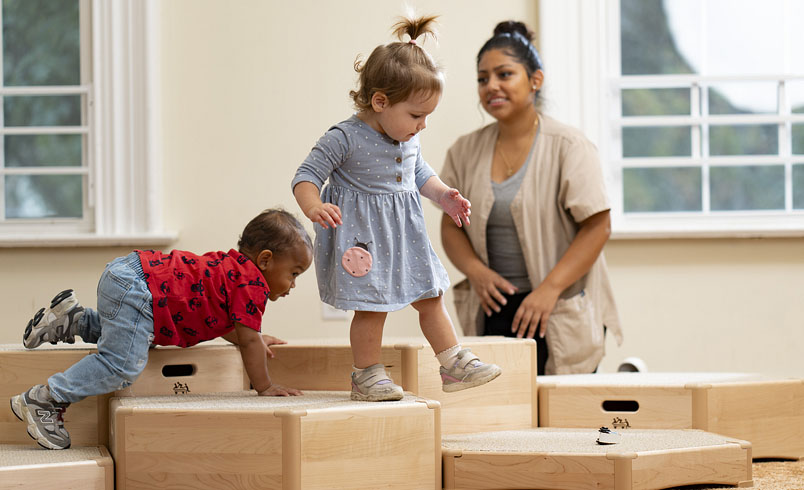
The sensory-seeking child is easy to spot and often exhausting to manage. He is the one running when he should be walking, jumping off furniture, crashing into people, touching everything, hanging from doorframes, roughhousing constantly, and somehow never seeming to tire. What looks like poor impulse control or a bid for attention is usually a nervous system screaming for proprioceptive and vestibular input. His brain is not getting the information it needs to organize itself, so he is hunting for it in every way he can find.
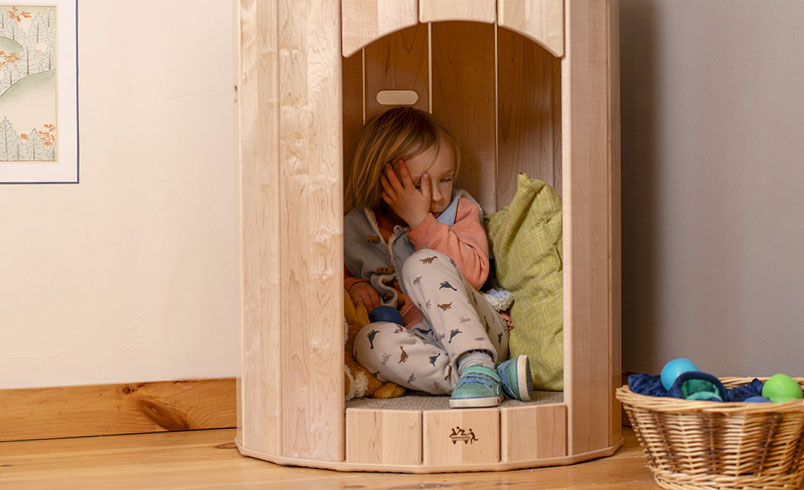
The sensory-avoiding child is quieter and sometimes missed entirely. She may resist the playground, cling to predictable spaces, become distressed by unexpected touch, cover her ears, melt down in busy environments, or seem rigid and inflexible about transitions. Her nervous system is doing the opposite: receiving too much input and struggling to filter it. She shuts down or withdraws as the only way she knows to manage the flood.
And then there’s the child who is a little of both, depending on the day. The one who was fine yesterday and is falling apart today, who is fine at home but struggles at school, or thrives at recess and then can’t sit for circle time.
Sound familiar? Most children, at various points in their development, and particularly in a world that keeps them still and “screened” for much of the day, will show some version of these patterns. They are not broken. They are under-moved.
Movement as Medicine
Here is the thing that changes everything once you understand it: movement does not just release energy. It regulates the nervous system. This is not a metaphor. It is physiology.
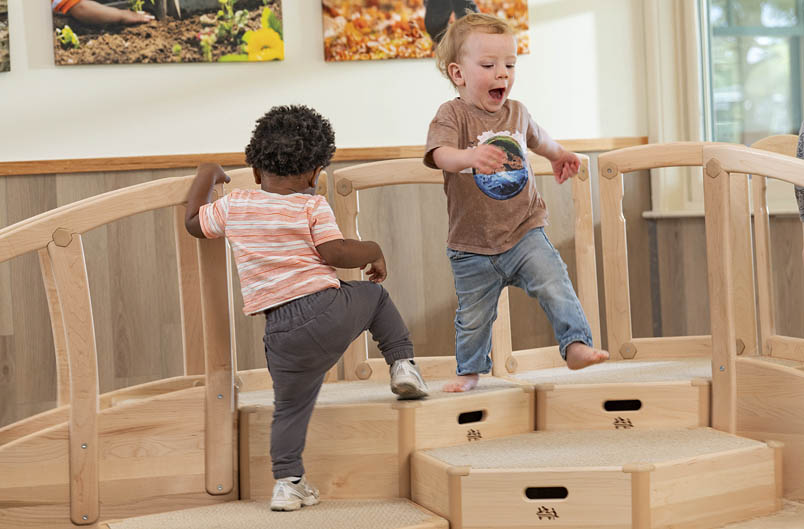
Heavy proprioceptive work, like pushing, pulling, carrying, climbing, has a calming and organizing effect that can last for one to two hours after the activity ends (Moghadam 2018). This is why an occupational therapist might recommend a “sensory diet” of physical activities woven throughout the day—not as a reward for good behavior, but as a prerequisite for it.
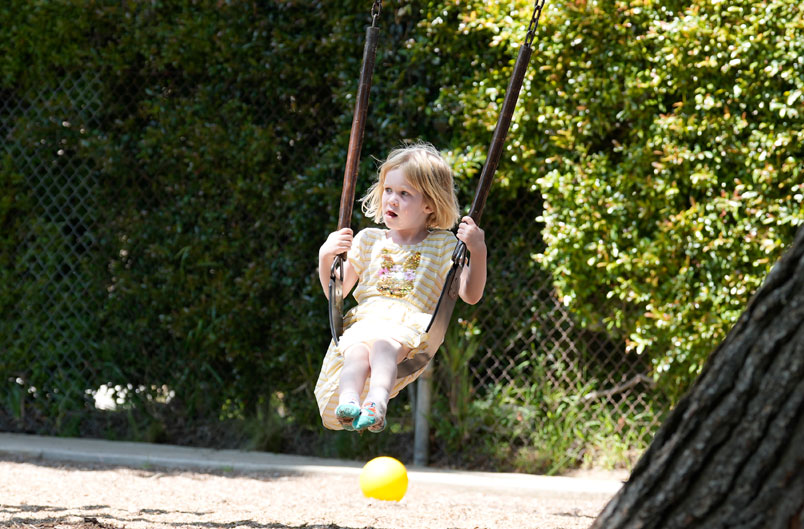
Vestibular movement, like swinging, spinning, rocking, rolling, sliding, is alerting for a child who is under-stimulated, and can be organizing and calming when the input is rhythmic and predictable (Pingale 2018). A child who is in perpetual motion may calm down dramatically after ten minutes on a swing. A child who seems shut down may come alive after a few minutes of log rolling or spinning.
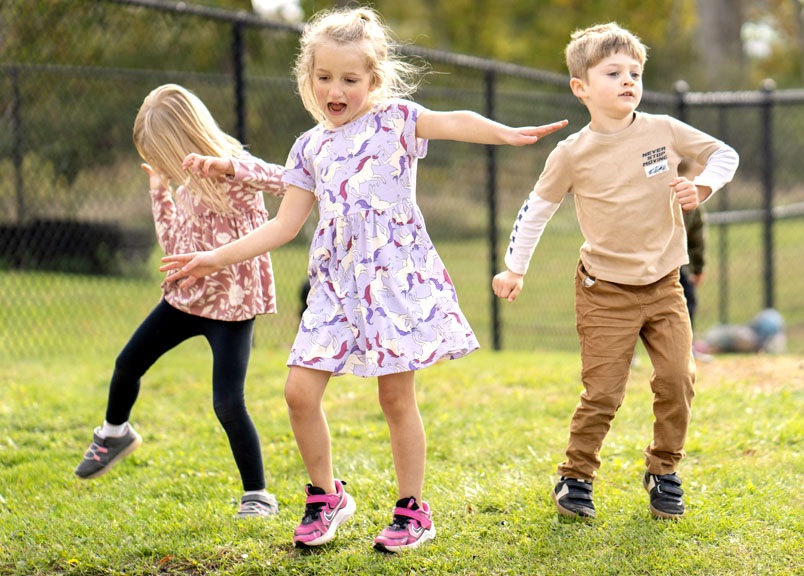
Aerobic movement, like running, jumping, dancing, and any big cardiovascular play, activates the BDNF we mentioned earlier, supporting the growth of new neural connections and improving executive function, emotional regulation, and working memory (Rico-González et al. 2025). This is not the opposite of learning. It is the setup for it.
For children who are struggling to regulate, whether they’re careening off the walls or shutting down completely, the instinct of many adults is to restrict movement: sit down, calm down, stop. This is understandable. It is also, neurologically speaking, exactly the opposite of what that child’s body and brain need. Taking recess away from the child who can’t sit still is like taking glasses away from the child who squints. You are removing the tool they need to do the very thing you’re asking of them.
Self-Regulation Is Not a Character Trait
Self-regulation, the ability to manage one’s emotions, impulses, and attention, is frequently treated as though it is a matter of character or discipline. Children who struggle with it are seen as undisciplined, attention-seeking, or lacking willpower. But self-regulation is a developmental skill, and like all developmental skills, it requires the right building blocks to support it.
Those building blocks are physical. A child who has well-developed proprioceptive and vestibular systems is a child who understands where her body is in space, how much force she is using, and whether the world around her is stable. She has developed this understanding by using her body in the trial and error of physical play. And a child who gets regular aerobic movement has a brain that is literally better equipped, both chemically and neurologically, to manage emotion and impulse. That physical groundedness, in all three systems, is the foundation on which emotional and behavioral regulation is built.
When children lack that foundation, because they have not had enough movement, because their nervous systems are naturally more sensitive, or both, then self-regulation becomes extraordinarily difficult. And when self-regulation is hard, so is everything else.
The good news is that these systems respond to input. They can be developed and strengthened. A child who receives consistent, appropriate, whole-body movement throughout the day—not just at recess or P.E., but woven into the fabric of daily life—is a child whose nervous system is being built toward greater resilience and self-regulation over time.
What You Can Do
You do not need a diagnosis, a specialist, or a special budget. You need to recognize what you’re seeing and build movement into the day with intention. Here are strategies that work across the spectrum.
For the sensory-seeking, high-energy child:
- Heavy work before sitting. Before a focused task, give them something physical to do: carry the book bags in from the hall, push the chairs in, carry a bucket of sand or water across the yard. Proprioceptive input before an academic task can make the task dramatically more accessible.
- Structured movement breaks every 20–30 minutes for elementary children and every 5-10 minutes for preschool-aged children. Not as a reward—as a reset. Jumping jacks, animal walks, a quick lap around the playground, dancing to one song. Keep it vigorous and brief.
- Give them a job. Carrying laundry, pushing a full cart, rearranging furniture, taking out the trash. Make this child your helper as often as possible.
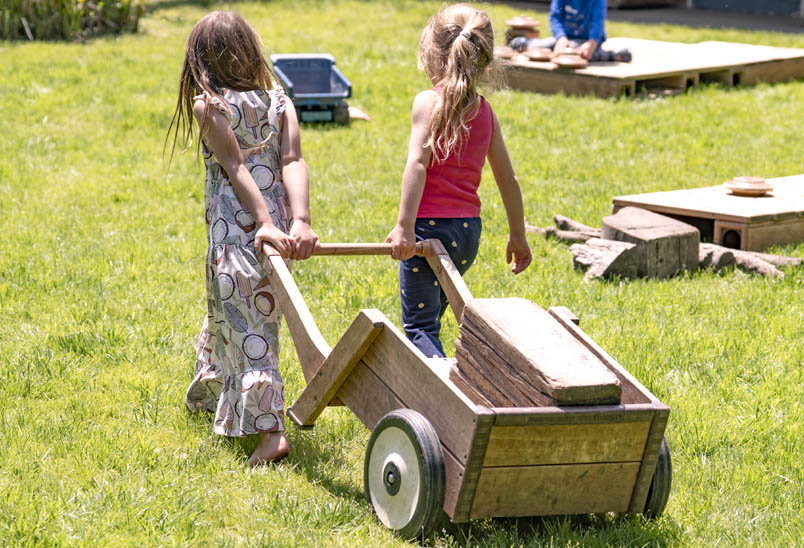
- Climbing, hanging, digging, and carrying on the playground. Monkey bars, rope climbing, carrying buckets of sand or water, digging in dirt, pushing wagons—these are proprioceptive gold for the child whose engine is always running high.
For the sensitive, over-responsive, or “shut down” child:
- Rhythmic, predictable movement is regulating. Swinging in a steady arc, rocking, bouncing (not jumping) on a trampoline, or marching in a pattern can help an overwhelmed nervous system find its footing. Avoid sudden, unpredictable movement, which can feel alarming to a sensitive system.
- Start small and build. Do not force a hesitant child onto equipment that frightens her. Gentle exposures over time—short swings, slow rolls, low climbing—build the vestibular system’s confidence gradually.
- Give advance warning before transitions. Sensory-sensitive children are often most dysregulated during unexpected changes. A two-minute warning before moving from one activity to the next can prevent a meltdown that would otherwise seem to come from nowhere.
- Create a movement-based calming corner. A small rocking chair, a yoga mat, or a balance board in a quiet area of the classroom gives an overwhelmed child a movement tool she can use independently when she feels herself flooding.
For every child, every day:
- Spinning, swinging, and sliding—often dismissed as “just playing”—are vestibular development. Protect them. Fight for them. Recess is not a luxury.
- Log rolling, somersaults, and bear crawls build the vestibular system and cross-brain coordination in ways that no worksheet or screen can replicate.
- Tag games, obstacle courses, and running build cardiovascular fitness and flood the brain with BDNF—making the learning that follows more effective, not less.
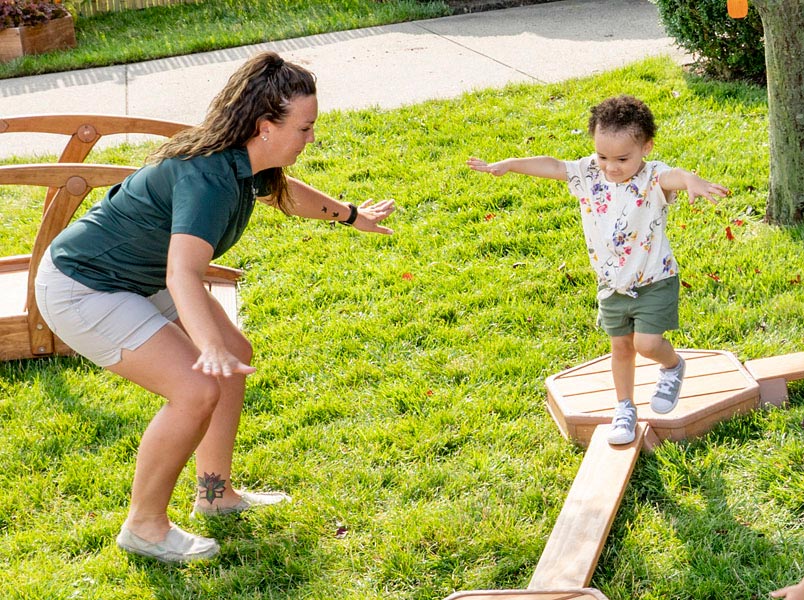
- Move with them. Children co-regulate with the calm adults around them. When you get on the floor, take a walk, or do jumping jacks alongside a dysregulated child, you are offering your regulated nervous system as a model. That is powerful.
See the Child, Not the Behavior
The child who crashes into everything is not trying to be difficult. The child who melts down at the sound of a fire drill is not being dramatic. The child who spins in circles until he falls over is not just being silly. They are all doing the same thing: using the only tools they have to regulate a nervous system that is working overtime.
When we see behavior through the lens of communication rather than defiance, our response changes. Instead of “Can you please stop?,” we can ask “What does this child need right now?” And almost always, the answer involves movement.
The science is unambiguous. The nervous system is built through the body. Self-regulation grows from a foundation of physical experience. And movement—big, whole-body, joyful, sometimes loud and messy movement—is not the enemy of a well-regulated child. It is how we grow one.
References
Guardado, K. E., and S. R. Sergent. 2023. "Sensory Integration." In StatPearls. Treasure Island, FL: StatPearls Publishing. Updated July 31, 2023. https://www.ncbi.nlm.nih.gov/books/NBK559155/.
Lane, S. J., Z. Mailloux, S. Schoen, et al. 2019. "Neural Foundations of Ayres Sensory Integration®." Brain Sciences 9 (7): 153. https://doi.org/10.3390/brainsci9070153.
Latomme, J., P. Calders, H. Van Waelvelde, T. Mariën, and M. De Craemer. 2022. "The Role of Brain-Derived Neurotrophic Factor (BDNF) in the Relation between Physical Activity and Executive Functioning in Children." Children 9 (5): 596. https://doi.org/10.3390/children9050596.
Moghadam, S. F. 2018. "Vestibular Therapy Improved Motor Planning, Attention, and Balance in Children with Attention Deficit Hyperactivity Disorders: A Randomized Controlled Trial." Physical Medicine and Rehabilitation Research 3. https://doi.org/10.15761/PMRR.1000171.
Pingale, V. 2018. "The Effects of Sensory Diets on Children with Sensory Processing Disorder." PhD diss., Texas Woman's University.
Rico-González, M., D. González-Devesa, C. D. Gómez-Carmona, and A. Moreno-Villanueva. 2025. "Exercise as Modulator of Brain-Derived Neurotrophic Factor (BDNF) in Children: A Systematic Review of Randomized Controlled Trials." Life 15, no. 7: 1147. https://doi.org/10.3390/life15071147.