
Stop Defending Play. Start Translating It.
How Early Childhood Educators Can Help Families See the Learning Happening Right in Front of Them
| November 2026
A parent walks into a preschool classroom at the end of the day. Her child is wearing a firefighter hat, carrying a purse, and standing behind a table that has somehow become the counter of a grocery store. Three other children are involved. There is pretend money scattered across the table. Someone is making a shopping list. Two children are negotiating over who gets to be the cashier.
The parent smiles and asks the question early childhood educators hear every day: “What did she learn today?” The teacher replies, “She had a great day! She played in dramatic play for most of the morning.”
The teacher knows that statement represents an incredibly rich period of learning. But what did the parent hear? She played.
Now imagine the teacher answering differently:
She and three friends created a grocery store this morning. She helped decide who would have each job, counted pretend money, made a shopping list, worked through a disagreement when two children wanted to be the cashier, and changed the story when another child introduced a new idea. I watched her practice language, early math, planning, negotiation, problem-solving, and self-regulation for almost 30 minutes.
Same child. Same play. Same learning. But now the parent can see it. And perhaps one of the greatest opportunities in early childhood education is hidden inside that difference.
We have spent years defending the value of play. Maybe it is time we become equally skilled at translating it.
The Learning Is Happening. Can We Make It Visible?
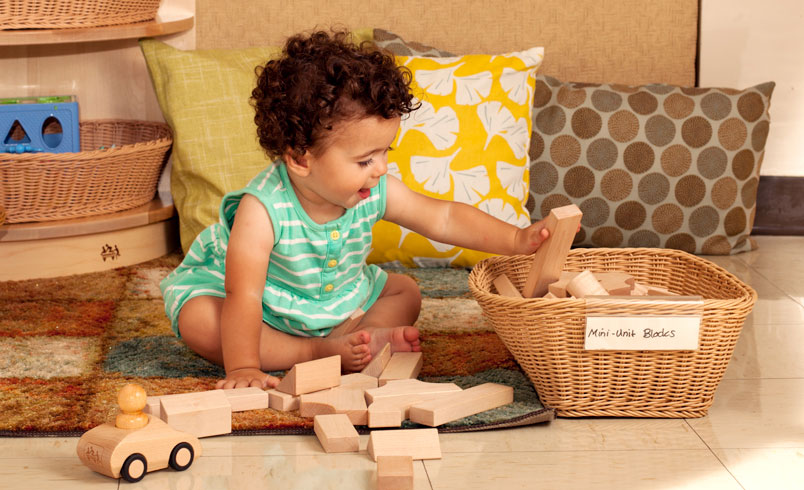
An educator watches a toddler repeatedly fill a container with blocks, dump it out, and begin again and sees experimentation with quantity, cause and effect, persistence, and spatial relationships.
An educator watches two preschoolers transform a row of chairs into a bus and sees symbolic thinking, language development, collaboration, memory, and negotiation. An educator watches a child climb onto a log, hesitate, reposition one foot, stretch out both arms, and continue forward building on proprioceptive knowledge. A family member may see a toddler dumping toys on the floor, children pretending, and a child getting dangerously close to falling. Neither adult is uncaring. They are simply looking through different lenses.
Early childhood professionals have studied development, observed hundreds or thousands of hours of children’s behavior, and learned to recognize development occurring in moments that can look ordinary from the outside. Families cannot be expected to automatically see what professionals have spent years learning to recognize. That creates an opportunity for us. Instead of repeatedly telling families that play is important, we can show them what is happening inside the play.
A Crawling Baby Is Doing More Than Crossing the Room
Consider one of the earliest forms of exploration: crawling.
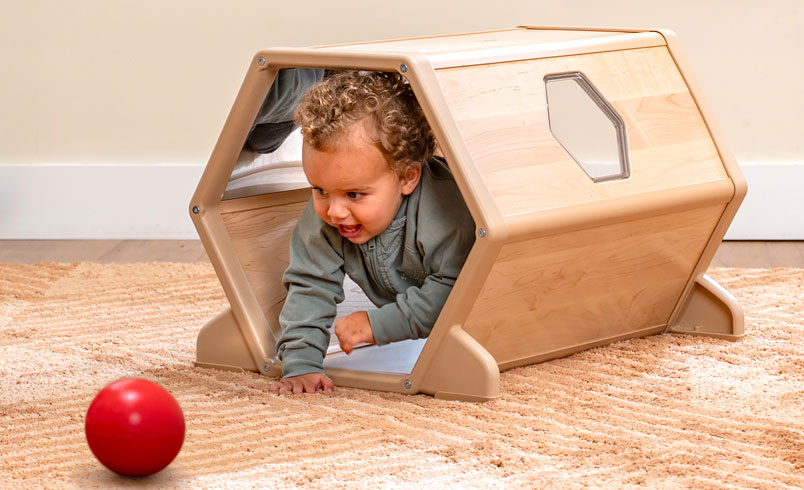
A ball rolls away from an infant. The infant watches it travel across the floor, turns their body toward it, begins crawling, pauses when the ball disappears partially behind a piece of furniture, changes direction, and continues toward it.
To an adult watching casually, the baby crawled after a ball.
Look more closely.
The child's eyes followed a moving object. The child maintained attention to where it traveled. The brain processed distance and direction. The child coordinated visual information with body movement. Both sides of the body worked together. The child encountered an obstacle and adjusted the route. There was motivation, persistence, spatial awareness, motor planning, and problem-solving happening before the child ever reached the ball.
Now imagine communicating that to a family:
“When you see her crawling after a ball like that, watch her eyes. She is figuring out where the ball went and then coordinating her body to get there. When it moves around something, she has to adjust her plan. That simple game is giving her brain and body an incredible amount of information.”
We did not turn crawling into an academic exercise. We simply helped another adult see what was already there.
That distinction matters.
Don't Tell Me What They Played. Tell Me What Happened Inside the Play.
Dramatic play provides another perfect example.
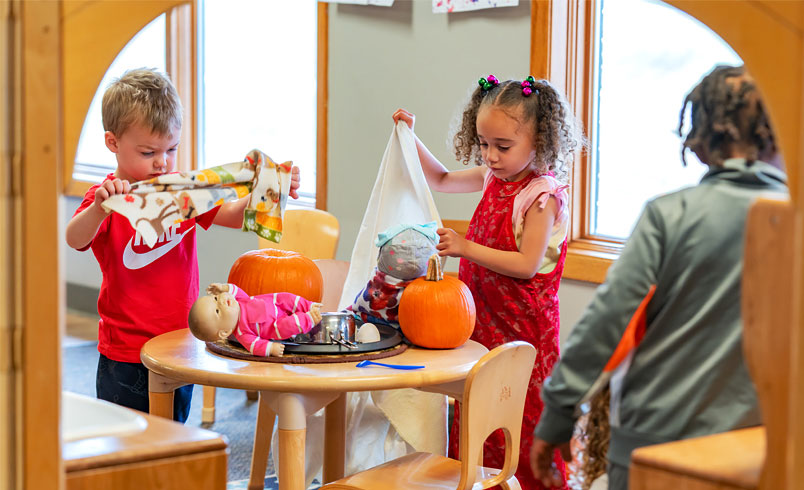
A child puts on an apron. Another child holds a baby doll. Someone announces that the baby is sick. Within minutes, the housekeeping area becomes a doctor's office. Children assign roles. Someone decides the baby needs medicine. Another child disagrees. A clipboard appears. Someone pretends to answer a telephone.
The children had to listen, remember the storyline, communicate ideas, interpret another person’s intentions, stay in character, negotiate competing ideas use one object to represent another, adapt when the story changes, manage disappointment when someone else gets the desired role, and solve problems without an adult providing every answer. That is an extraordinary amount of cognitive and social work disguised as a game about a sick baby.
But when families ask what happened that day, how often do we say: “They played house.”
What if we became more precise?
“Today your child helped turn our dramatic-play area into a doctor's office. She was explaining symptoms, asking questions, taking turns with materials, and negotiating roles with other children. She had to remember what everyone had decided and adjust when the story changed. That kind of pretend play is building communication, flexible thinking, memory, and perspective-taking.”
The goal isn't to make play sound impressive. The goal is to accurately describe what children are doing.
Learning Continues Outdoors
Then, there is outdoor play.
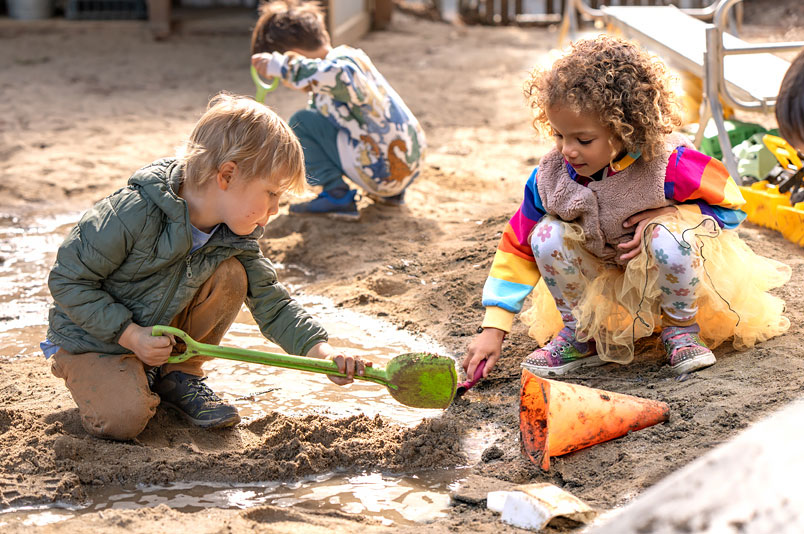
A child comes home with mud on their pants, dirt underneath their fingernails, and possibly one sock whose original color is no longer identifiable.
A family may understandably wonder what happened. Imagine being able to tell them:
“Today she and another child were trying to build a river in the dirt. At first, the water disappeared into the soil. They decided they needed more water. Then they discovered too much water destroyed one of the walls they had built. They kept changing the amount and rebuilding until they could make the water travel farther.”
What happened there? Prediction. Cause and effect. Collaboration. Measurement. Engineering. Persistence. Sensory exploration. Problem-solving.
The mud isn't evidence that learning stopped when children went outside. Sometimes the mud is evidence that learning became visible enough to wear home.
Outdoor play also allows children to encounter challenges that adults cannot perfectly manufacture.
A hill changes the way a body has to balance. A stick does not come in standardized sizes. Water behaves differently from sand. A log may be slippery one morning and dry the next. Wind changes what happens to a scarf tossed into the air.
Nature introduces variability, and variability requires children to adjust. That is learning.
A Block Tower That Falls Is Not a Failed Product
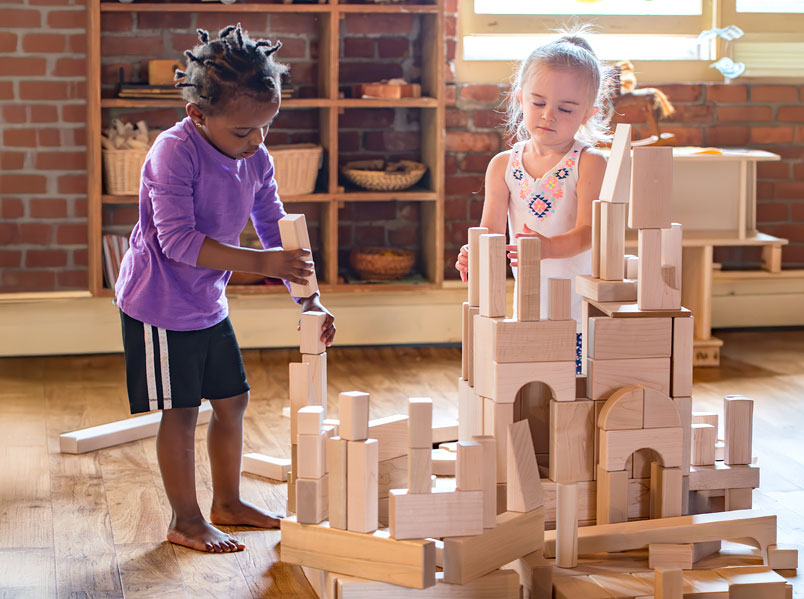
We also need to reconsider how we describe children's creations. Imagine a child building a block tower. It falls. The child rebuilds it. It falls again. A third attempt lasts longer but eventually collapses too.
If we focus only on the finished product, we may miss the most important part of the experience.The learning may be happening precisely because the tower didn't work. The child is discovering stability. Weight. Balance. Spatial relationships. Prediction. And perhaps most importantly, what to do when the first idea fails.
There is a lesson here for how educators communicate with families: Don't only tell families what children made. Tell them what children had to do to make it.
The beautiful block structure at pickup time is interesting. The four collapsed versions that came before may tell us far more about the child's learning.
From Documentation to Translation
Many early childhood programs already document children's experiences. But documentation and communication are not necessarily the same thing.
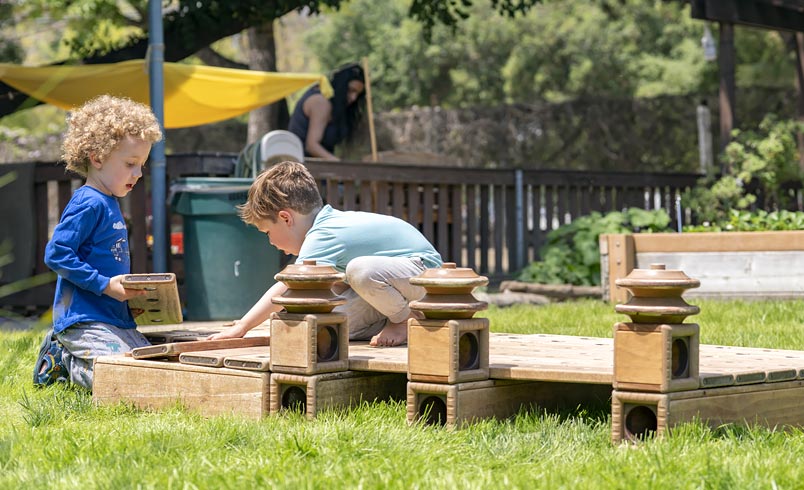
A photograph of four children building outside tells a family what happened. A sentence explaining the thinking, interaction, persistence, or development occurring in that photograph helps the family understand why it mattered.
And that requires practice.
A Simple Framework: SEE, NAME, CONNECT
This is where I believe early childhood programs have an enormous opportunity.
We can develop educators not only as observers of children but as translators of learning. Consider this simple formula for talking to parents.
SEE
What did the child actually do? Stay with observable behavior: “Marcus carried several blocks across the playground and began placing them between two platforms.”
NAME
What learning or development was occurring? Planning. Spatial reasoning. Balance. Persistence. Problem-solving.
CONNECT
Why does that matter in language a family can understand?
“Marcus was trying to build a bridge today. He tested several ways of positioning the blocks before finding one that stayed balanced. He was making a plan, testing it, and changing his approach when it didn't work—the same problem-solving process he will use in many kinds of learning.”
See it. Name it. Connect it. That is the difference between reporting an activity and communicating learning.
Directors: Build This Skill in Your Teachers
If we want teachers to communicate the value of play confidently, program leaders must give them opportunities to practice identifying and describing the learning they observe.
Try this at your next staff meeting. Put one photograph of children playing on the screen. Do not provide any context, and ask your team what they see. The first answers will probably describe the activity: “They're playing with blocks.” Then ask: What is happening underneath what you see?
Now the conversation changes. Teachers begin identifying language, planning, coordination, cooperation, persistence, sequencing, symbolic thought, risk assessment, mathematical thinking, emotional regulation, and problem-solving.
Then ask the most important question: How would you explain that to a parent without using early childhood jargon?
Do it repeatedly. Soon teachers begin seeing differently. And when educators become more skilled at seeing learning, they become more intentional about supporting it.
Parents Don't Need a Child Development Degree
Translating play does not mean overwhelming families with professional terminology. Imagine telling a parent: “Today we supported proprioceptive input, bilateral integration, executive functioning, and symbolic representation.” Technically impressive. Practically useless.
Instead say: “She is learning where her body is in space.” “He had to use both sides of his body together.” “She remembered the group's plan even while the story kept changing.” “He became frustrated when the tower fell, but instead of leaving, he tried a different way.”
Families understand persistence. They understand confidence. They understand learning to solve a problem, work with another person, manage frustration, make a plan, and try again. These are the bridges between child development and the world families know.
Connect Play to the Future Without Stealing Childhood From the Present
Families naturally think about the future. We should help families understand that many of the capacities children will need later are being developed through experiences happening now.
The child negotiating over a shovel is practicing conflict resolution. The child creating a pretend restaurant is using language, memory, sequencing, and symbolic thinking. The toddler navigating around an obstacle to reach a toy is solving a problem. But there is an important line we should not cross. We do not have to turn every childhood experience into preparation for adulthood in order for it to matter.
Play has value because children are learning through it. Play also has value because children deserve childhood.

Stop Defending Play. Start Translating It.
Early childhood educators have spent decades being asked to defend play. We should continue advocating for developmentally appropriate practice. But perhaps we can change the conversation. Instead of responding defensively, invite families into what we see.
Show them the child's eyes tracking the rolling ball. Explain the negotiation happening inside the pretend restaurant. Describe the experiment that created the muddy pants. Point out the moment a child paused at the top of the climbing structure, evaluated the distance, changed their footing, and decided what to do next.
Make the invisible visible. Because when families understand what is happening through play, they become more than recipients of information.
They become partners in protecting it.


