The Importance of the Seven Active Supervision Strategies for Infants and Toddlers in Early Learning Environments
| June 2026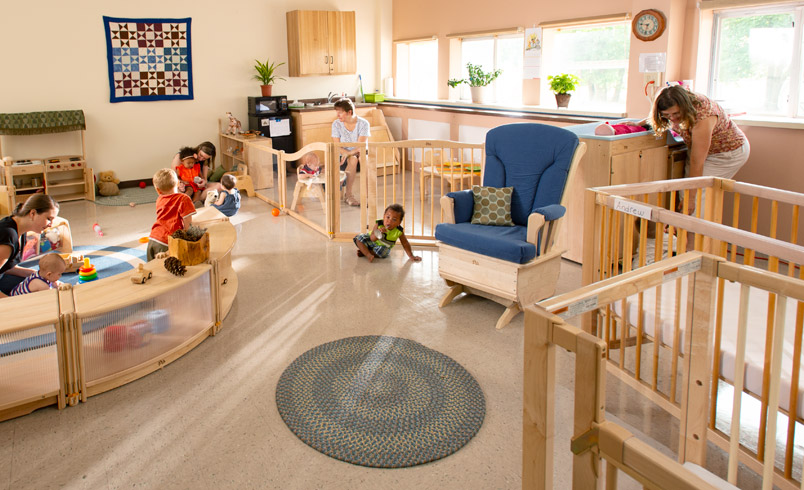
Active supervision is the backbone of high-quality infant and toddler care. While curriculum, materials, and routines all matter, none of them can function safely or effectively without vigilant, intentional supervision from educators. Young children, especially those under three, are curious explorers with limited understanding of danger. Their motor skills are still emerging and their brains are rapidly developing (National Research Council and Institute of Medicine 2000). They rely on adults not only to keep them safe, but also to scaffold their learning, support their emotional regulation, and create environments where they can confidently explore.
The Seven Active Supervision Strategies—Set Up the Environment, Position Staff, Scan and Count, Listen, Anticipate Children’s Behavior, Engage and Redirect, and Reflect—work together to create a system of constant awareness and responsive caregiving (Office of Head Start 2024a). Crucially, the physical environment is not a passive backdrop to these strategies. It is an active tool. How a room is arranged, where furniture is placed, what materials are accessible, and how sightlines are designed all directly influence how effectively educators can implement each strategy.
For early childhood educators, understanding the relationship between environment and supervision is not simply a compliance requirement—it is a professional practice that elevates the quality of care, strengthens relationships, and promotes optimal learning outcomes (NAEYC 2020).
1. Set Up the Environment: Creating Spaces That Support Safety and Learning
The physical environment is the first and most foundational layer of supervision. When a space is thoughtfully arranged, educators can see children clearly, reach them quickly, and anticipate challenges before they arise. A poorly designed environment, by contrast, forces educators into reactive rather than proactive modes of supervision (Office of Head Start 2024a).
Why It Matters
- Safety begins with visibility. Open, uncluttered spaces reduce the number of hidden corners where children can disappear from view.
- A well-designed environment reduces risky behavior. Cluttered or overstimulating spaces can lead to frustration, unsafe climbing, or collisions between children.
- Developmentally appropriate materials encourage purposeful, predictable exploration—making it easier for educators to supervise with confidence (NAEYC 2022).
Environmental Design Tips
- Identify blind spots during initial setup and rearrange furniture or use mirrors to eliminate them. Walk the room at a child’s height to see what they see.
- Use low, open shelves (no taller than 3 feet) so educators can see over the tops of shelves across the entire room.
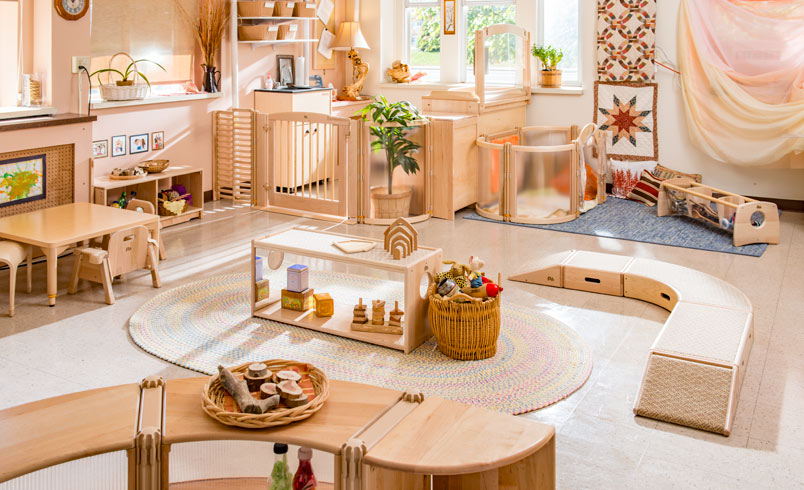
- Choose clear or mesh dividers between play zones rather than solid partitions so sightlines are preserved while activity areas remain distinct.
- Avoid placing large furniture (cribs, cubbies, play yards) in the center of the room. Push them to the perimeter walls to open the central space.
- Anchor high-traffic zones—like art, sensory tables, and dramatic play—where they are visible from multiple educator positions.
- Ensure all exit doors are clearly visible from the main activity area and consider door alarms or Dutch doors for infant/toddler spaces.
- Conduct a quarterly hazard walk: look for sharp corners at child height, loose cords, unstable furniture, small objects on low surfaces, and gaps in fencing outdoors (Virtual Lab School n.d.).
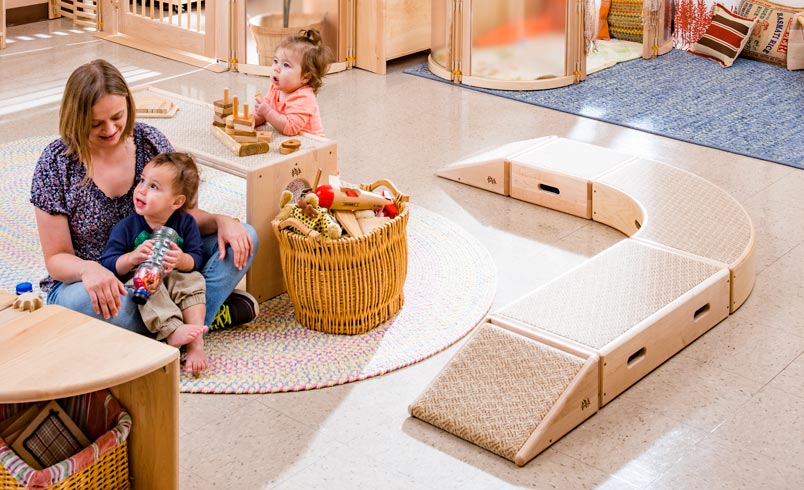
2. Position Staff: Being Where Children Need You Most
Even the most attentive educator cannot supervise what they cannot see or reach. Intentional staff positioning ensures that educators are physically located where supervision is most needed—and that the environment is designed to support those positions.
Why It Matters
- Infants and toddlers move quickly and unpredictably. Staff who are positioned reactively—always responding after the fact—will struggle to keep pace.
- Proximity to children supports emotional security. Children who can see a trusted adult nearby are more likely to take appropriate risks in their play (Petersen and Wittmer 2018).
- Strategic positioning eliminates blind spots by placing human eyes where furniture cannot.
Environmental Design Tips
- Identify high-supervision zones in your room—areas where children tend to climb, roughhouse, or face peer conflict (e.g., block areas, slides, sensory bins). Designate these as “teacher anchor” zones.
- Place a low, durable educator chair or stool at each high-supervision anchor point so that a teacher is naturally inclined to station themselves there during play.
- Position diaper changing stations and feeding areas along walls with clear sightlines to the rest of the room, so the caregiver performing routines can still scan the group.
- Arrange seating for bottle feeding or rocking so the caregiver faces outward into the room rather than toward a wall.
- Map your room’s supervision zones before each day: assign staff to zones rather than to activities, and rotate intentionally.
- During outdoor play, identify fixed supervision posts with overlapping coverage—no single post should have a blind spot that another post cannot cover (Office of Head Start 2024a).
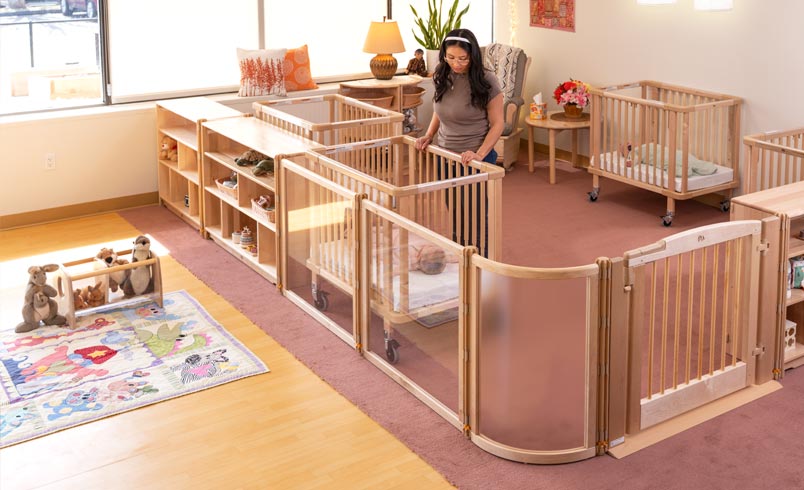
3. Scan and Count: Maintaining Awareness in a Dynamic Environment
Scanning and counting is the active practice of regularly sweeping the room with your eyes, locating every child, and confirming that all are safe. It sounds simple—but environments can make scanning easy or surprisingly difficult.
Why It Matters
- Children move fast. A toddler can be across the room or behind a piece of furniture in seconds.
- Visual confirmation of every child’s location is the most reliable safety check available to educators.
- Consistent scanning builds a mental map of the room, making it easier to notice when something is out of place (National Center on Early Childhood Health and Wellness n.d.).
Environmental Design Tips
- Eliminate all furniture arrangements that create enclosed “pockets” where a child can sit or lie without being visible from anywhere else in the room.
- Use convex safety mirrors in corners or along high shelving to reflect views that would otherwise be hidden.
- Arrange play zones in a clear visual hierarchy: zones with the highest physical risk (climbing, water, sand) should always be positioned in the most visible areas.
- Color-code or label zones on a posted room map so educators can quickly name and scan each area during a count.
- Keep pathways between play areas clear so children cannot get trapped behind furniture or wedged into inaccessible spaces.
- Outdoors, identify your counting stations before play begins—designated spots where an educator can see the entire yard in one or two glances.
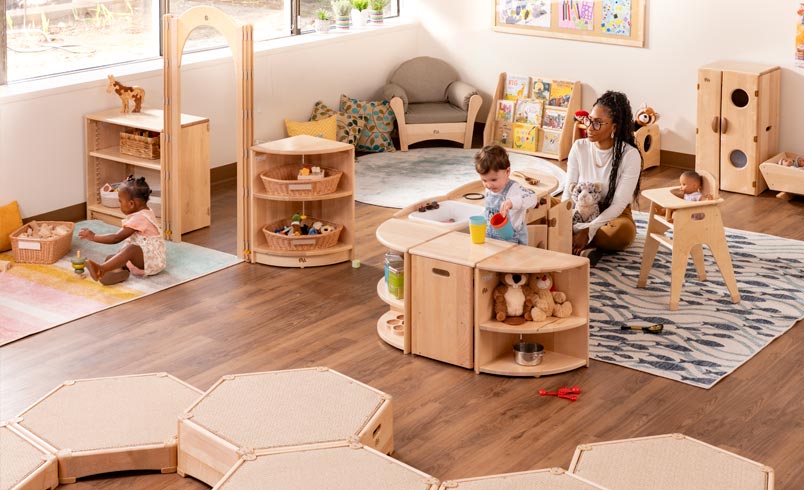
4. Listen: Using Sound as a Supervisory Tool
Listening is often undervalued as a supervision strategy, yet it is one of the most powerful. Infants and toddlers communicate distress, excitement, and danger through sound. A skilled educator trains themselves to hear not just what children say, but the emotional tone, location, and urgency in the sounds of the room.
Why It Matters
- Infants, especially, cannot yet use words to signal danger, discomfort, or need. Tone, rhythm, and intensity of crying are critical informational cues.
- Sudden silence in an active room can be just as concerning as a loud crash. Educators who listen actively notice both.
- Sound carries from behind partitions, around corners, and out of sight—giving educators an additional layer of awareness beyond what they can see (Office of Head Start 2024a).
Environmental Design Tips
- Minimize ambient noise sources (loud music, fans, HVAC near play areas) that can mask a child’s cry or distress call.
- If background music is used, keep it at a level where a child’s normal voice can still be heard across the room.
- Position “quiet” activities (books, puzzles, sensory play) in less acoustically active corners, and louder activities (music, dramatic play, block building) in more central, visible zones where sound naturally carries.
- During nap times or rest periods, use positioning so that at least one educator has an unobstructed acoustic and visual view of all sleeping children.
- Identify areas in your environment where sound is absorbed (carpeted corners, soft furniture alcoves) and be especially vigilant about visual checks in those zones.
- Outdoors, note areas where wind or playground equipment noise can drown out children’s voices and increase visual scanning frequency in those areas.
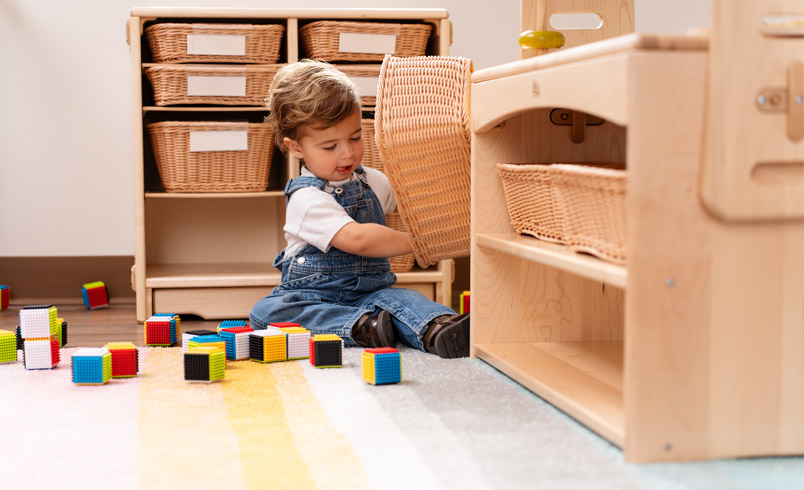
5. Anticipate Children’s Behavior: Staying One Step Ahead
Anticipation is about knowing children well enough—individually and developmentally—to predict what they are likely to do before they do it. The environment can be deliberately designed to support this, channeling curiosity toward safe exploration and reducing the likelihood of dangerous impulses.
Why It Matters
- Prevention is always more effective than reaction. Anticipating a child’s trajectory allows an educator to reposition or intervene before an injury occurs.
- Understanding developmental stages helps educators predict risk: a newly walking toddler will challenge every surface, a curious 18-month-old will put everything in their mouth (National Research Council and Institute of Medicine 2000).
- Educators who know their children well can read body language, fatigue cues, and emotional escalation before it reaches a crisis (Petersen and Wittmer 2018).
Environmental Design Tips
- Map your “active play zones”—areas that tend to produce the most physical movement, peer conflict, or climbing—and review them seasonally as children’s developmental stages shift.
- Observe which areas of the room tend to attract a cluster of children at the same time and redesign traffic flow to reduce crowding (e.g., move a popular toy to a less congested zone).
- Use child-height barriers (foam wedges, soft mats, low shelves arranged as dividers) to naturally direct movement away from hazards rather than relying solely on verbal redirection.
- Design transitions thoughtfully: bottlenecks at cubby areas, doors, and hallways are common injury points. Stagger transitions or widen pathways.
- Periodically observe the room from a chair at child height. You will see what is visually stimulating and tempting to children in ways that an adult vantage point misses.
- Review your environment after any near-miss incident. Ask: was there an environmental condition that made this more likely? Can the space be adjusted?
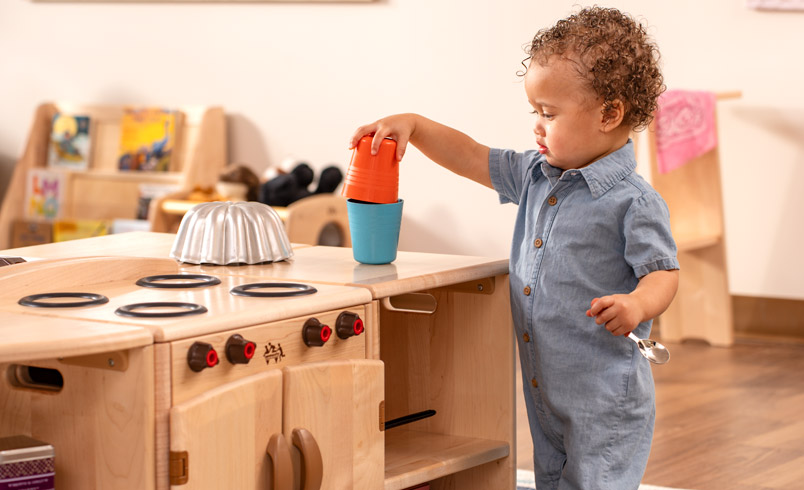
6. Engage and Redirect: Supporting Safe and Meaningful Exploration
Engaged children are generally safer children. When children are absorbed in meaningful, appropriately challenging play, they are less likely to seek stimulation through risky behavior. The environment plays a direct role in the quality and sustainability of children’s engagement.
Why It Matters
- Boredom and under-stimulation are among the most common contributors to unsafe behavior in young children.
- Redirection is more effective when there is a rich, inviting alternative nearby. The environment must be stocked and arranged to make redirection natural.
- Sustained engagement strengthens the child-educator relationship, which is itself a protective factor (NAEYC 2020).
Environmental Design Tips
- Rotate materials regularly to sustain novelty and engagement. A child who has exhausted every option on the shelf will begin to test boundaries.
- Ensure that every area of the room has something inviting to do at all times. Dead zones—empty corners or bare tables—invite unstructured, risky movement.
- Place redirection materials close to high-risk zones. If a child tends to climb a particular shelf, ensure there is an appropriate climbing or movement option within three feet.
- Design cozy, contained spaces (a pop-up tent, a soft reading nook, a low-sided sensory bin area) that support children who need a lower-stimulation option when they are dysregulated.
- Ensure materials are accessible to children independently. When children must ask for everything, they become more frustrated and more likely to seek stimulation in unsafe ways.
- Use visual cues (pictures on shelves showing where items belong) to help children engage purposefully and independently with their environment.
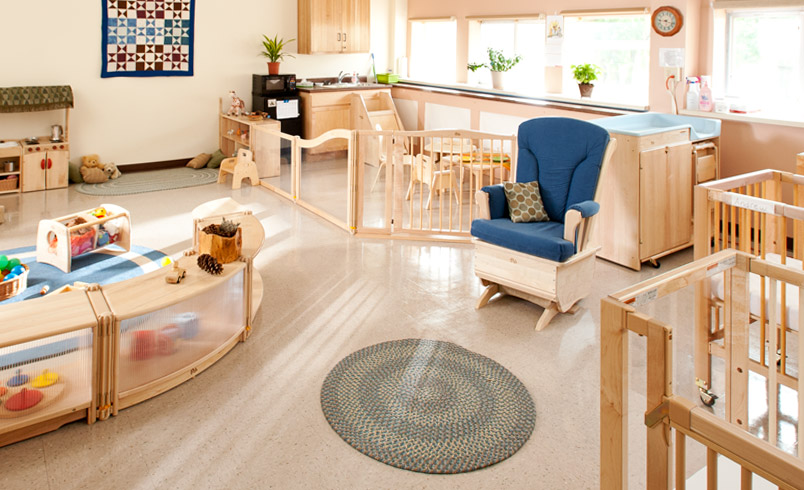
7. Reflect: Improving Practice Through Continuous Learning
Reflection is the practice of stepping back—individually and as a team—to evaluate what is working, what is not, and what can be improved. For active supervision, this means regularly reviewing both educator practices and environmental conditions.
Why It Matters
- Reflection strengthens team communication and ensures that everyone is aware of current risks, developmental changes in the group, and necessary adjustments.
- It promotes continuous improvement: even skilled educators benefit from regular review of their supervision practices.
- Reflection supports professional growth and reduces burnout by helping educators feel purposeful and effective in their work (Division for Early Childhood 2014).
Environmental Design Tips
- Build a brief environmental review into your daily or weekly team reflection: Are there new blind spots? Has the furniture shifted? Are materials at the right level for current developmental stages?
- After any safety incident or near-miss, conduct a structured environmental debrief: Where was the hazard? Was it visible? Could a redesign reduce the risk?
- Use a simple supervision map—a floor plan with staff positioning marked—to review whether coverage was adequate and where gaps existed.
- Invite a colleague or coach to observe the room from a fresh perspective and identify environmental risks you may have habituated to.
- Photograph your room monthly to create a visual record of how the environment evolves. Compare images to identify unintentional changes (furniture drift, material accumulation) that may have created new hazards.
- Include families in environmental reflection: they will often notice things educators miss, and their insight about their child’s behavior at home can help you anticipate risks in the program environment.
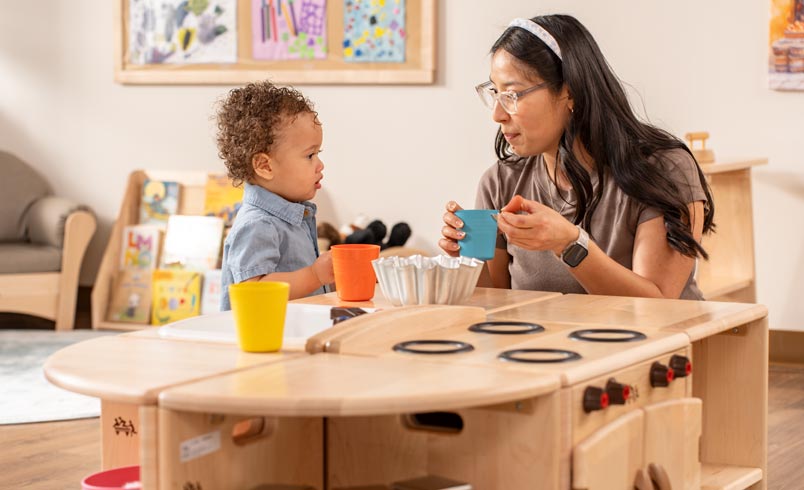
Why Active Supervision Matters So Deeply in Infant and Toddler Care
The seven strategies work together as a system. No single strategy can carry the full weight of supervision alone. When the environment is designed well, staff can be positioned effectively. When staff are positioned effectively, they can scan and listen with ease. When scanning and listening are practiced, anticipation becomes Impomore reliable. And when anticipation is strong, engagement and redirection become the primary mode of interaction—supportive and developmental, rather than corrective and reactive (Office of Head Start 2024a).
Together, these strategies:
- Prevent injuries before they happen by removing hazards and creating clear sightlines.
- Support secure attachment by placing educators close to children in ways that feel natural and warm.
- Enhance learning opportunities by ensuring the environment is rich, accessible, and intentionally designed for exploration.
- Build trust with families by demonstrating that their child’s safety is embedded into every aspect of the program’s design.
- Strengthen teamwork by giving educators shared language and shared environmental tools.
- Promote equity by ensuring that all children—regardless of ability, temperament, or background—can access a safe and engaging environment (Division for Early Childhood 2014).
Bringing It All Together: Active Supervision as a Professional Standard
For early childhood educators, active supervision is not optional—it is a core professional responsibility. The seven strategies work together to create a system of safety, responsiveness, and intentionality. And the environment is the silent partner in that system: shaping what educators can see, hear, reach, and anticipate at every moment.
Educators who master these strategies—and who treat the environment as a living, adjustable tool rather than a fixed backdrop—build stronger relationships with children, reduce stress and prevent crises, create richer learning experiences, and foster a culture of safety and collaboration that families can feel from the moment they walk in the door (NAEYC 2022).
Consider conducting a full active supervision environment audit of your space. Walk through each of the seven strategies and ask: does our environment support this practice? Where can we adjust, simplify, open up, or enrich? Small environmental changes—repositioning a chair, removing a partition, adding a mirror—can have a profound impact on supervision quality and on the experiences of the children in your care.
References
[1] Office of Head Start. 2024. “Active Supervision.” U.S. Department of Health and Human Services. https://headstart.gov/safety-practices/article/active-supervision.
[2] Office of Head Start. 2024. “Resources for Infant/Toddler Learning Environments.” U.S. Department of Health and Human Services. https://headstart.gov/learning-environments/article/resources-infanttoddler-learning-environments.
[3] National Research Council and Institute of Medicine. 2000. From Neurons to Neighborhoods: The Science of Early Childhood Development. Edited by J. P. Shonkoff and D. A. Phillips. Washington, DC: National Academies Press. https://doi.org/10.17226/9824.
[4] NAEYC. 2022. Developmentally Appropriate Practice in Early Childhood Programs Serving Children from Birth through Age 8. 4th ed. Washington, DC: National Association for the Education of Young Children.
[5] NAEYC. 2020. “Developmentally Appropriate Practice: A Position Statement of the National Association for the Education of Young Children.” https://www.naeyc.org/resources/position-statements/dap/contents.
[6] Virtual Lab School. n.d. “Learning Environments: An Introduction.” Infant & Toddler Module. U.S. Department of Agriculture. https://www.virtuallabschool.org/infant-toddler/learning-environments/lesson-1.
[7] Virtual Lab School. n.d. “The Outdoor Environment: Designing for Engagement.” Infant & Toddler Module. U.S. Department of Agriculture. https://www.virtuallabschool.org/infant-toddler/learning-environments/lesson-3.
[8] Division for Early Childhood. 2014. DEC Recommended Practices in Early Intervention/Early Childhood Special Education 2014. Arlington, VA: Council for Exceptional Children. https://iris.peabody.vanderbilt.edu/module/env/cresource/q1/p01/.
[9] National Center on Early Childhood Health and Wellness. n.d. Active Supervision Toolkit. Washington, DC: National Association for the Education of Young Children. https://www.nmcaacc.com/uploads/5/5/0/4/55044167/active-supervision-toolkit.pdf.
[10] Petersen, Sandra H., and Donna S. Wittmer. 2018. Infant and Toddler Development and Responsive Program Planning: A Relationship-Based Approach. 4th ed. Boston: Pearson.