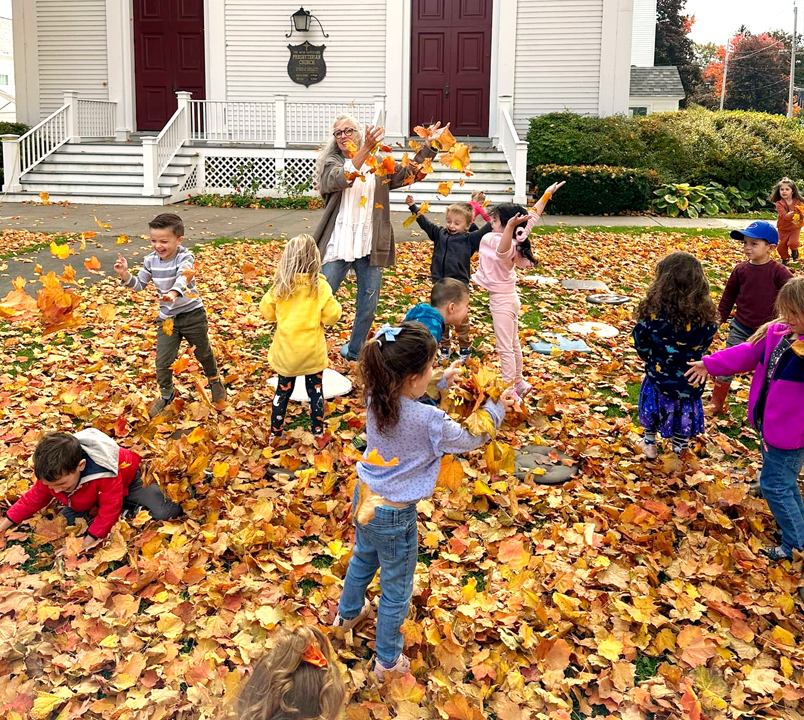
Seventy Years of Play
How One Nursery School's Enduring Philosophy Mirrors Timeless Childhood Needs
| March 2026The graduating class of 2025 and the graduating class of 1956 using the same table and chairs!
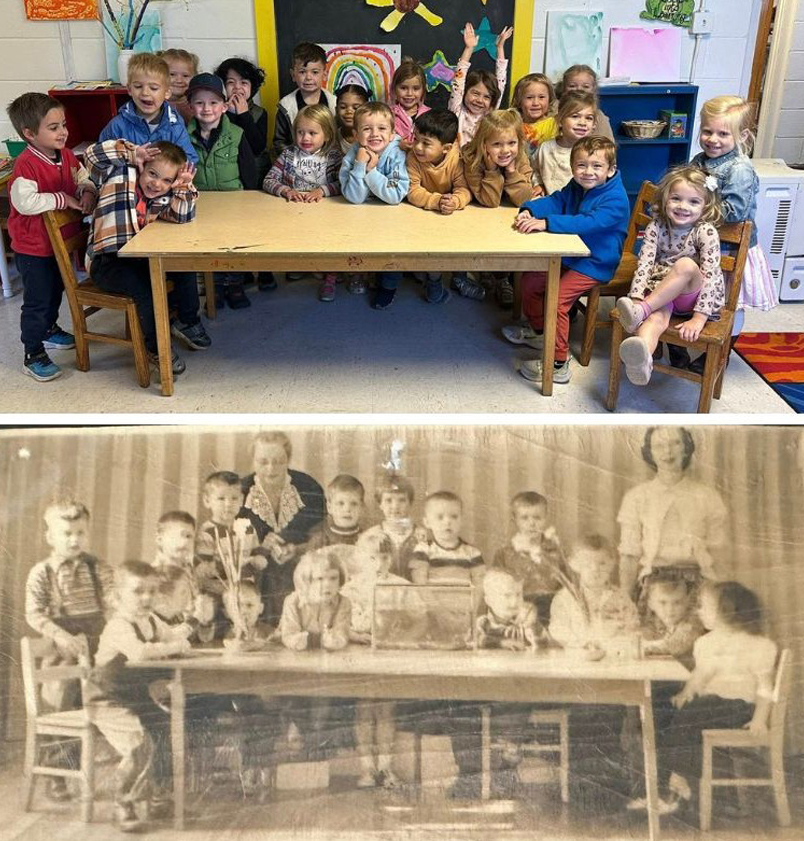
In the basement of a Presbyterian church in New Hartford, New York, something remarkable has been happening for seven decades. New Hartford Presbyterian Nursery School is celebrating its 70th anniversary this year—and some of the furniture and playthings that greeted its first students in 1955 are still welcoming children today.
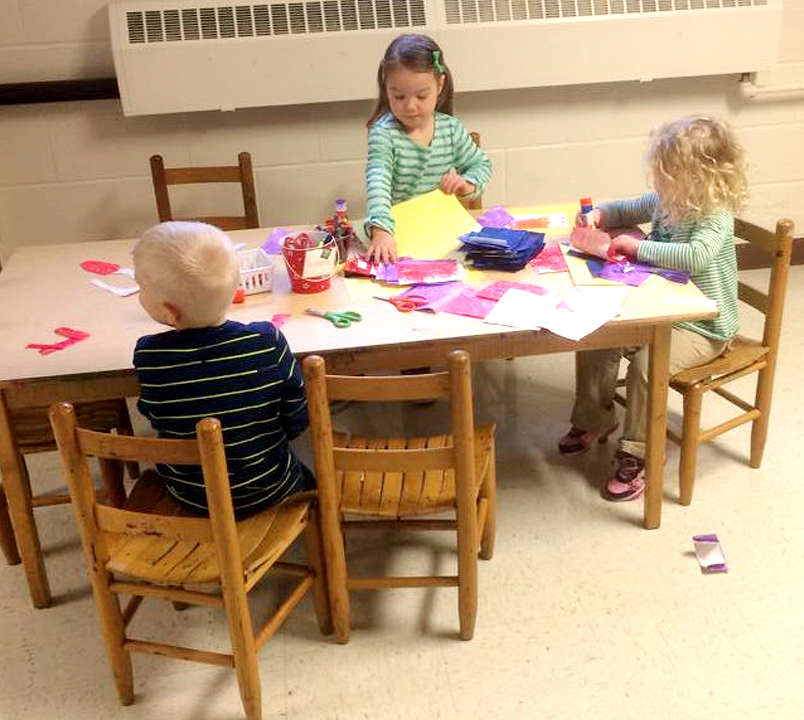
“While looking through old photos, I realized some of the Community Playthings furniture we still use—the tables and chairs, and ride-on toys—have been here since the beginning,” says Michelle Sosnowski, who has taught at the school for 18 years and attended herself as a child. “You can see the paint and the history and the scuff marks. The chairs have been climbed on, tipped over, knocked over, tripped over, you name it, and they're still solid furniture.”
The durability may be impressive, but what’s even more striking is what it represents: a steadfast commitment to a way of learning that honors how young children actually develop.
What Hasn’t Changed—and Shouldn’t
When parishioners founded the school in 1955, they wanted a nurturing place for their nursery-aged children. That simple mission hasn’t wavered. The school has operated in the same rooms, maintained a consistent schedule, and strived for low staff turnover. But most importantly, it has remained resolutely play-based and tech-free.
“We always say at Open House, we’ve been here for 70 years, and the one thing that has not changed is what three- and four-year-olds need,” Michelle says. “They need to be safe, secure, loved, and engaged.”
In an era when academic pressure increasingly trickles down to younger and younger children, this continuity feels almost radical. Michelle has watched the landscape shift dramatically during her nearly two decades working at the school.
“When my daughter attended 24 years ago, kids didn’t need to know ABCs, numbers, or letter cases before kindergarten. Now, there’s a push for early academic readiness, which can create emotional challenges for children who aren’t developmentally ready.”
The nursery school’s answer? Stay the course and give children what they need. No worksheets. No screens. And crucially, no toys that limit children’s creativity.
“Our approach has remained technology-free. Our toys don’t make noise or light up,” Michelle explains. “We want children to create the sounds of a tea kettle or a ringing phone themselves, rather than rely on toys to do it for them.”
This commitment to simplicity creates space for genuine creativity and learning—children must bring their own ideas, stories, and voices to their play.
The Furniture That Grows With Imagination
Open-ended play requires open-ended materials. Michelle describes how Outlast Toddler Platforms might become trains one day and obstacle courses the next. A piece originally designed as a tunnel has been repurposed by children again and again.
“Nothing is single-use—it’s all open-ended,” she says. “The children’s ideas often surpass what we intended, which is the beauty of this kind of play.”
This versatility matters deeply in a program where teachers carefully observe what captures children’s attention and follow their lead. If the children become fascinated by squirrels outside, that curiosity might blossom into a weeklong exploration. The environment is set up to invite initiative and discovery, not dictate it.
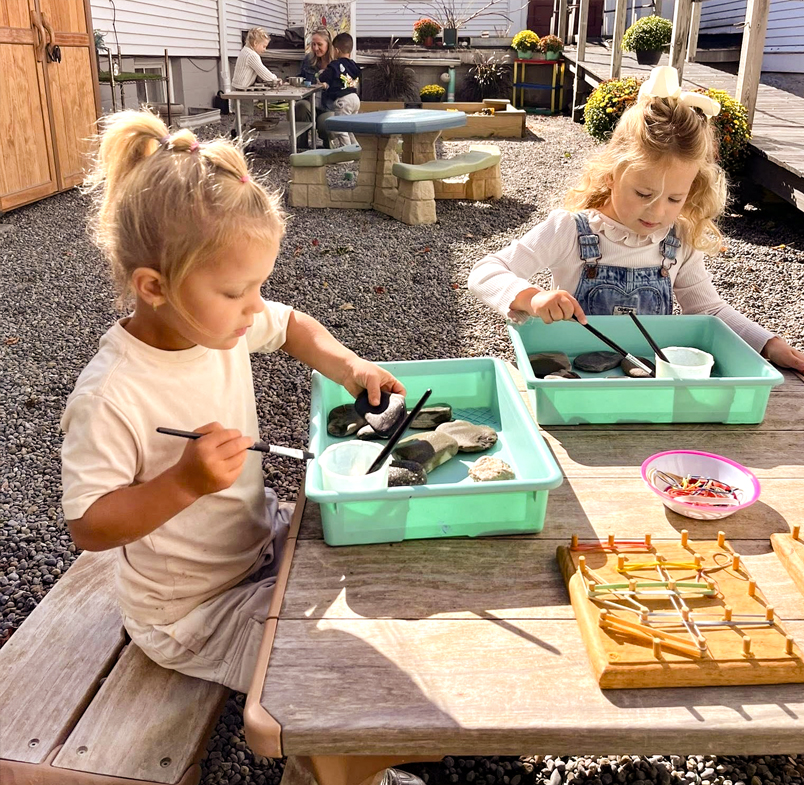
Michelle says the school believes in active learning—and that each child will develop at their own pace.
“Instead of sitting down with a piece of paper and pencil, you know, we will use sand and use their fingers for letters and cover a table with shaving cream and let them use shaving cream to do their stuff, or finger paints—I mean, you name it, we’ve used it.
“We’re all just on the same page of making it fun and hands-on,” she says. “We don't do letter of the day or letter of the week or anything like that. We sit with each child and figure out how to gauge what’s going to work for them till they get it.”
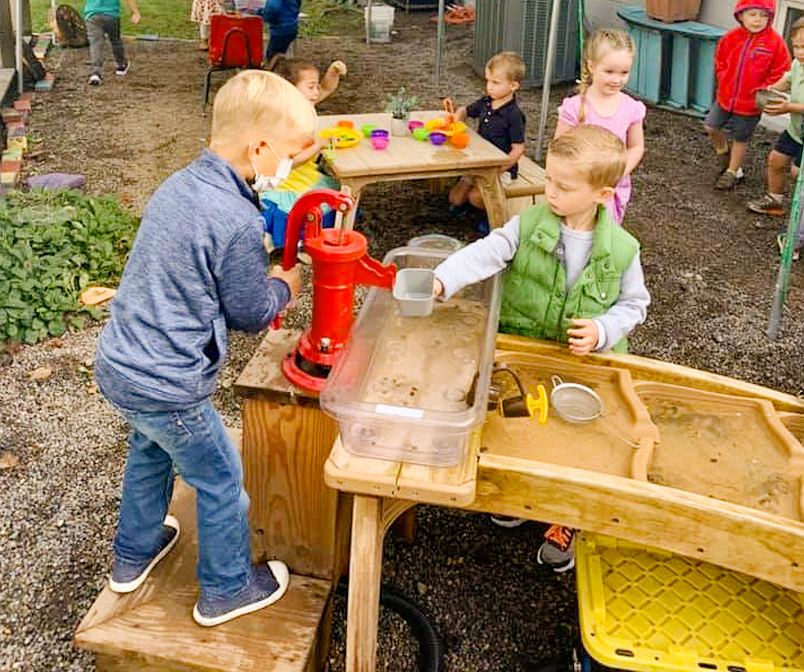
A Pandemic Revelation on Outdoor Play
The school had always valued outdoor time, but COVID-19 pushed them to reimagine what was possible. Masking three- and four-year-olds proved virtually impossible, so the teachers made a bold decision to get the kids back to school: move the entire program outside for as long as weather would allow.
“We started in September and stayed outside until just before Thanksgiving,” Michelle recalls. “And what we found was that the kids’ anxiety levels and their comfort levels—everything—just changed significantly by being outside.”
Without walls, children seemed freer, calmer. Instead of plastic materials that required constant sanitizing, they scooped rocks, counted leaves, and built projects from sticks.
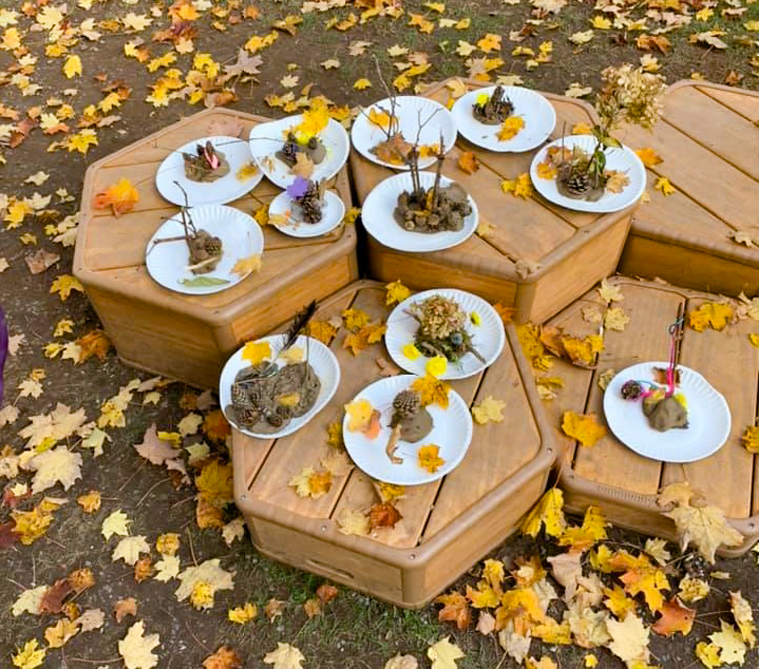
The experience was so positive that it fundamentally shifted the program. “We had such a great time with it,” Michelle says. “The kids loved it so much that we decided we’re going to be outside for as many days as possible. Everything that we do in the normal classroom, we take outside, and the kids love it. The teachers love it. It’s amazing.”
Even on snowy days, the children go out to play. The school’s janitor creates big snow piles for them to explore. Michelle laughs about being known as “the three crazy ladies in town” because passersby see them outside in all weather. But that dedication is only possible because the materials can handle it.
Having equipment robust enough to support this vision meant the school could follow what the children needed most—fresh air, space, and freedom—rather than being constrained by concerns about weather damage or wear.
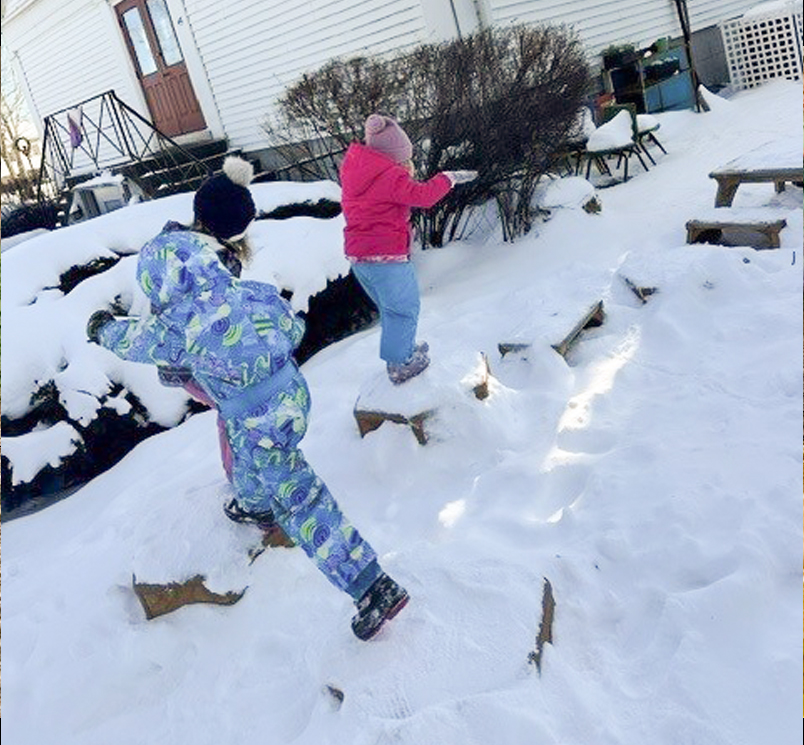
“All the Community Playthings outdoor products can withstand weather and rough play, which makes this possible,” Michelle notes.
What began as a pandemic necessity revealed a deeper truth about how young children thrive, and having the right tools made it sustainable.
The Gift of Childhood
Perhaps the greatest gift the nursery school offers is time to be a child—time to play, time to develop, time to build confidence and curiosity.
“They only have such little time to be little,” Michelle says. “We want them to be excited about learning, to gain age-appropriate independence. To see a nervous little three-year-old come in and then leave as a confident almost five-year-old is amazing.”
In a world that often seems to change faster than we can keep up, there’s profound comfort in knowing that some things remain constant. The needs of young children. The power of imaginative play. The value of materials built to last not just years, but generations.
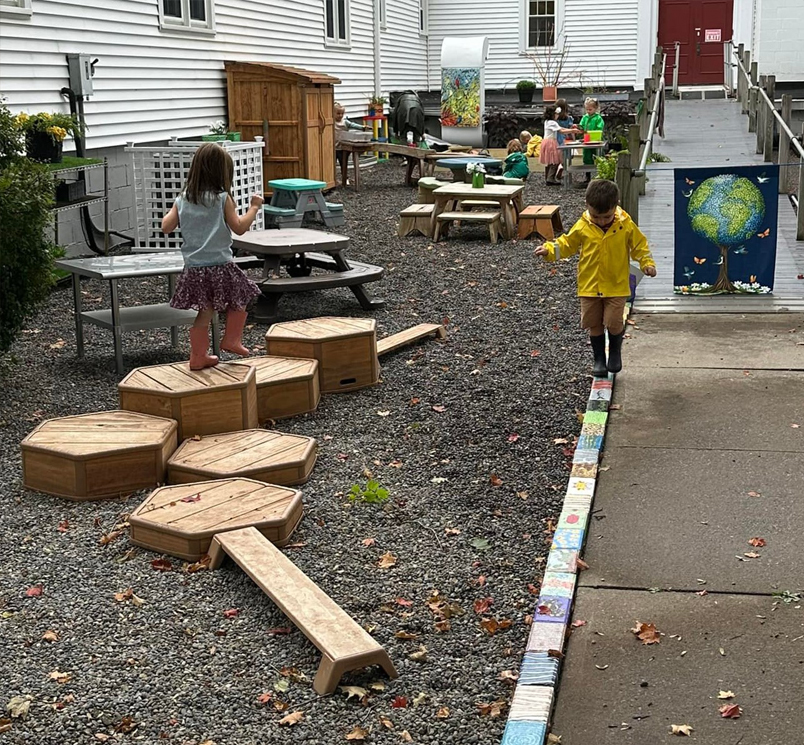
Seventy years ago, parents in New Hartford wanted a place where their children could be safe, nurtured, and free to explore. Today, that same space—with some of those same tables, chairs, and playthings—continues to offer exactly that.
This longevity reflects something deeper than good construction. It speaks to a design philosophy that respects both the investment of schools and the unchanging nature of childhood development. Three-year-olds in 1955 needed the same opportunities to climb, balance, build, and imagine as three-year-olds do today.